
Composite siding is lighter and cheaper; Hardie Board is tougher and more fire-resistant.
If you are weighing composite siding vs hardie board, you want the facts, not fluff. I have managed installs in wet coasts, hot deserts, and cold mountains. I know where each shines and where each fails. This guide breaks down composite siding vs hardie board with clear wins, trade-offs, and field-tested advice so you can choose with confidence.
Composite Siding vs Hardie Board: What They Are
Composite siding is a man-made cladding. Most products blend wood fibers with plastic resin. Others use full polymer blends with UV caps. The goal is a wood look with lower upkeep and less water risk than raw wood.
Hardie Board is a brand of fiber cement siding. It mixes Portland cement, sand, and cellulose fibers. It is dense, stable, and noncombustible. It is made to take heat, hail, and pests.
When people ask about composite siding vs hardie board, they often lump any man-made board together. But these two materials behave very differently in weather, fire, and long-term wear. Knowing the core recipe helps you predict real-life results.
Key Differences at a Glance
- Composition: Composite blends plastic and wood fibers; Hardie Board blends cement, sand, and cellulose.
- Fire: Composite can ignite or melt; Hardie Board is noncombustible and often Class A.
- Weight: Composite is light and easy to cut; Hardie Board is heavy and needs special blades.
- Movement: Composite expands and contracts with heat; Hardie Board is dimensionally stable.
- Moisture: Composite resists bulk water but can warp in heat; Hardie Board resists rot but needs sealed edges.
- Finish: Composite color is often baked-in; Hardie Board comes prefinished or paint-ready.
- Cost and ROI: Both can be cost-competitive installed; fiber cement often posts higher resale value in national reports.
These points set the stage for a deeper look at composite siding vs hardie board in day-to-day life.
Durability and Weather Performance
In sun and heat, composite can move more than fiber cement. Dark composite boards can bow or oil-can on hot walls if gaps and fasteners are not correct. I have seen this on south-facing walls in Arizona and Texas.
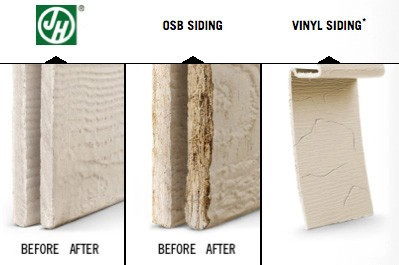
Fiber cement handles heat well. It does not creep or sag. In hail, Hardie Board tends to dent less than vinyl or thin composites. In freeze-thaw zones, both need a rainscreen and good flashing, but fiber cement tolerates swings better due to low thermal movement.
In rain, composite sheds water and will not rot. But trapped heat behind it can stress boards. Fiber cement does not rot or feed mold. But raw cut edges can wick water if you skip prime and paint. Seal every cut and you avoid this issue.
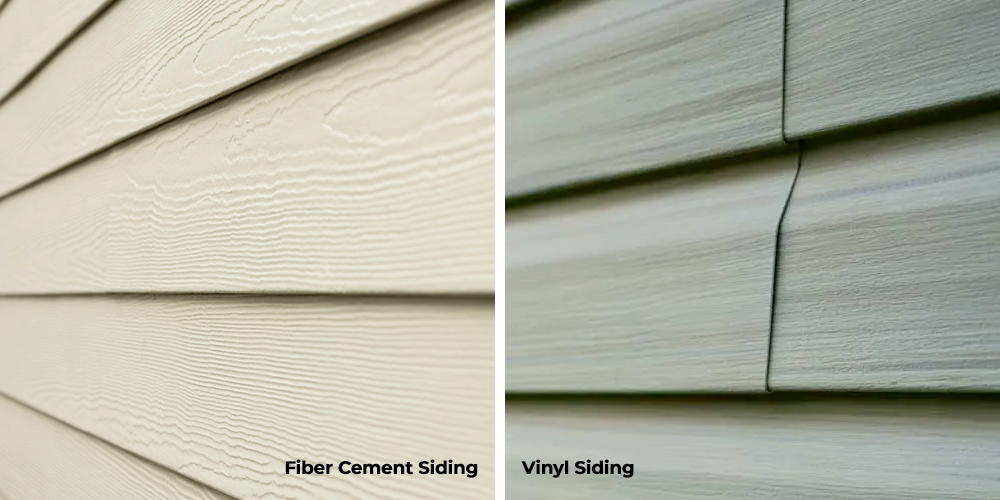
Maintenance and Longevity
Most composite siding needs simple washing. Many come with fade and stain warranties. You do not paint them often, if ever. But if color dating or fading happens, repainting some composites is tricky. Check the brand rules before you buy.
Hardie Board can come prefinished with factory paint coats. Those finishes carry warranty terms and hold color for many years. If you site-paint, expect a repaint in 10 to 15 years, like a well-kept wood home. Good prep and quality paint stretch that cycle.
From my field notes, the longest-lived jobs with the least touch-ups were fiber cement with factory finish on ventilated rainscreens. For composite, the best results came from lighter colors, shaded walls, and strict expansion gaps.
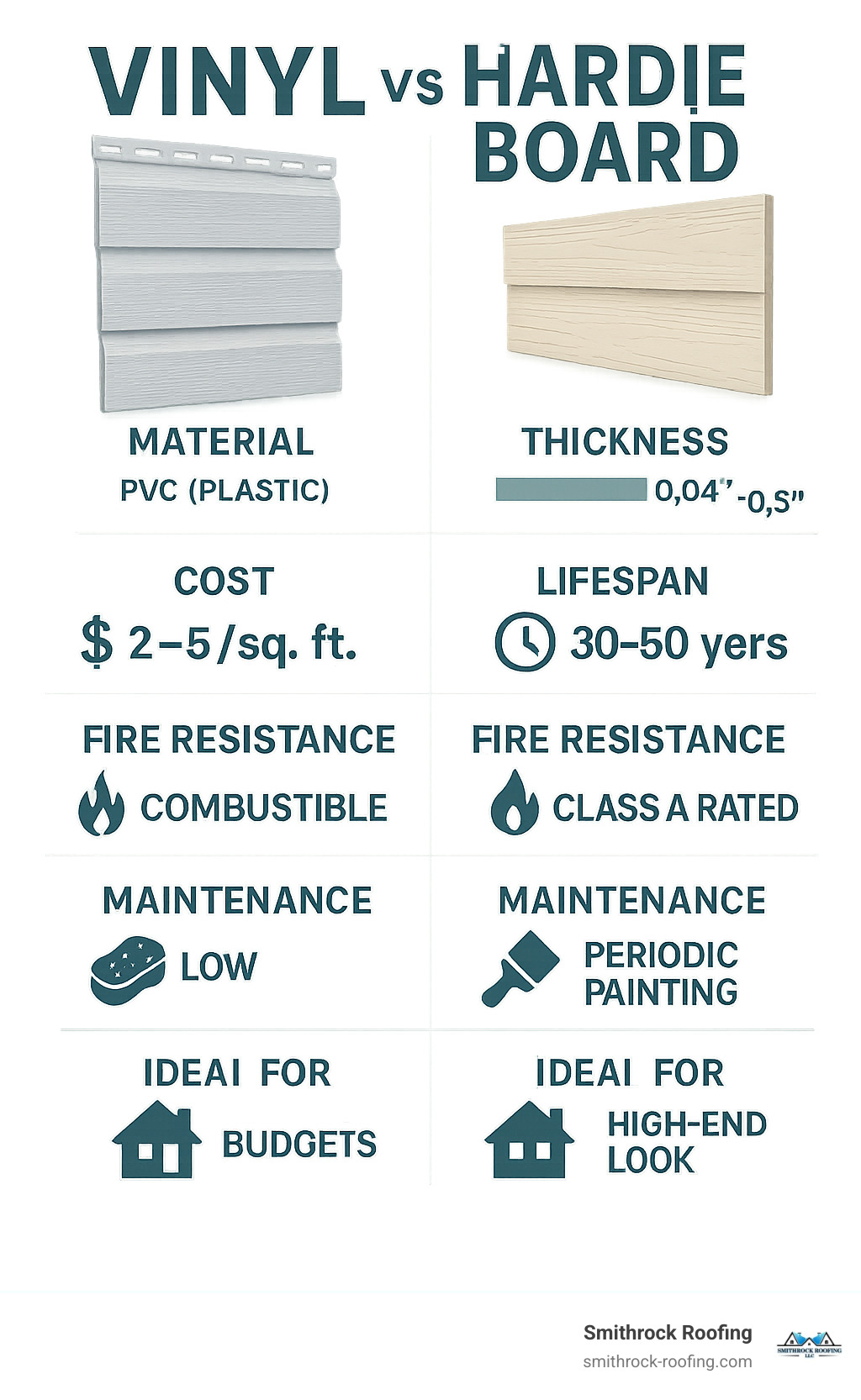
Fire, Pest, and Moisture Resistance
For fire zones, composite siding vs hardie board is not close. Most composites can burn or melt. Fiber cement is noncombustible and often tested to a Class A flame spread rating under common standards. Many building codes favor fiber cement in wildland-urban areas.
Termites and carpenter ants do not eat fiber cement. Composite resists insects too, but wood fiber in some recipes can be a food source if the cap is breached. I have only seen that in rare, severe cases. Still, it is a point to weigh in humid, pest-heavy regions.
For moisture, both need proper housewrap, flashings, and kick-out details. Composite hates trapped heat. Fiber cement hates unsealed cuts. Follow the rulebook and both hold up well.
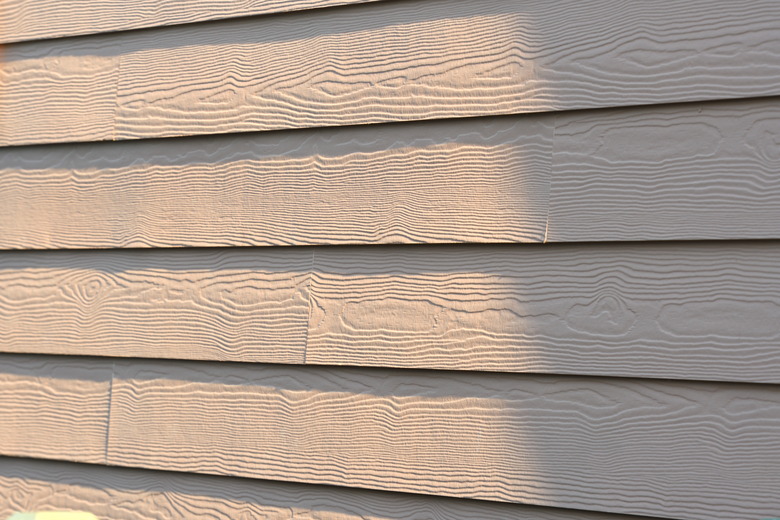
Curb Appeal and Design Flexibility
Composite siding aims for warm, wood-like faces. Many brands offer wide lap, board-and-batten, and shake looks. Colors are baked into the surface layer. That gives a neat, even look on day one.
Hardie Board has deep texture options and sharp shadow lines. You can get lap, panel, shake, and soffit pieces that blend well. Factory-finished colors are rich and consistent. If you want a custom hue, paint opens the door to any palette.
Up close, fiber cement often looks more like real painted wood. Composite looks very clean and uniform. Your style taste matters here. For historic homes, I tend to pick fiber cement. For modern builds with simple lines, composite can look very sleek.

Cost, Warranty, and ROI
On composite siding vs hardie board cost, region rules. Material price shifts with resin, cement, trucking, and labor rates. Composite can be cheaper on small jobs due to faster install. Fiber cement can be equal or a bit more when labor and tools are in the bid.
Warranties vary. Many composites carry 25 to 50-year limited warranties with fade limits. Hardie Board lists long limited warranties on boards and separate terms for factory finishes. Read the exclusions. Movement, heat, or wrong nails can void both.
Resale data from national remodeling reports have long ranked fiber cement near the top for ROI on exterior projects. Buyers recognize the brand and the fire resistance. Composite can pay off too, but the signal is stronger for fiber cement in many markets.
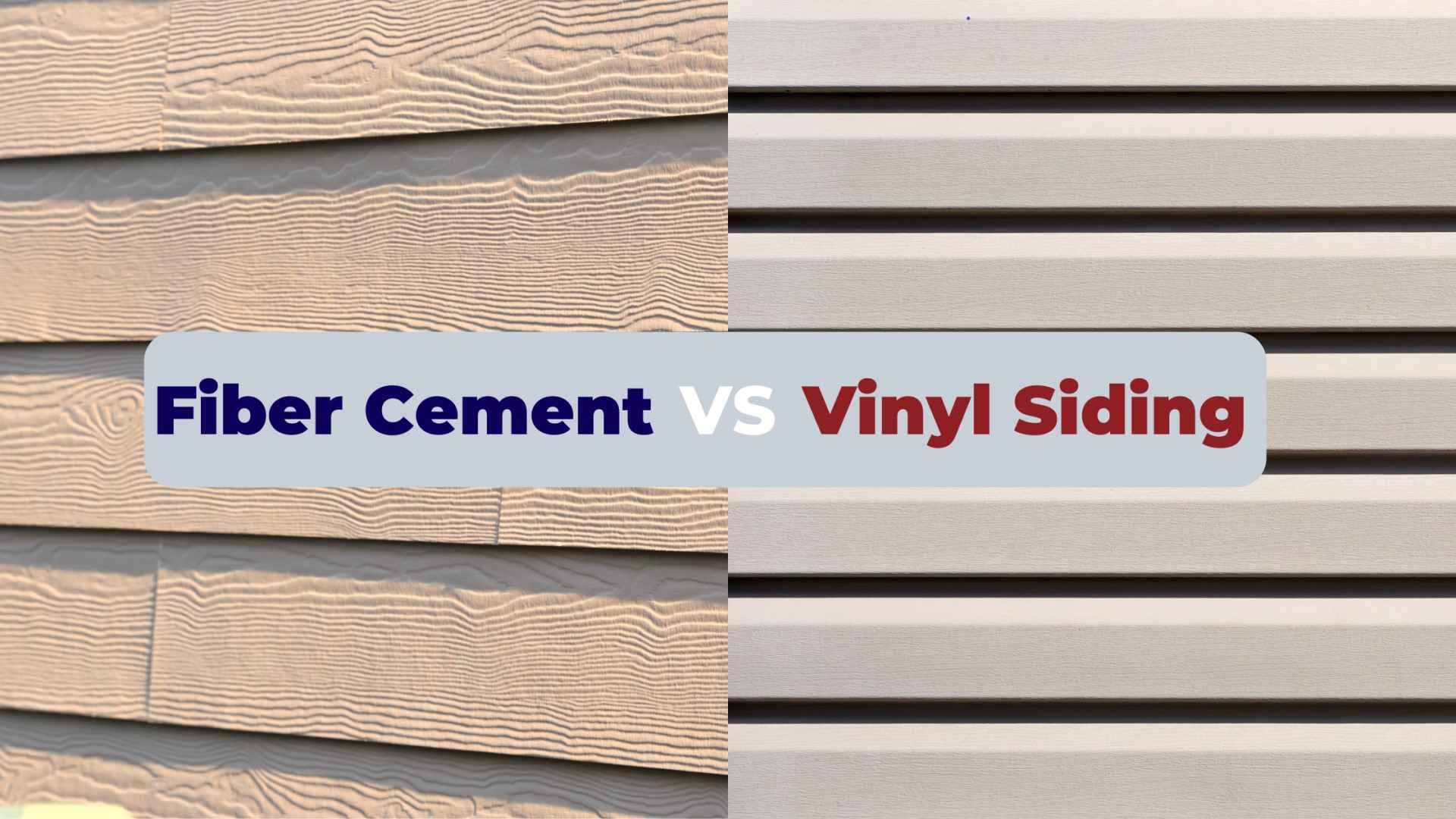
Installation Realities and Common Mistakes
Composite is light. It cuts with standard blades. The key is expansion space. You need proper end gaps, correct fastener placement, and a smooth, flat wall. I once fixed a wavy wall where the crew skipped a rainscreen and pinned boards tight. Heat made every seam pucker.
Hardie Board is heavy. Use two people or panel lifts. Cut with fiber cement blades and control silica dust with score-and-snap or saws with dust capture. Seal every cut edge. Do not drive nails too tight. Keep correct clearances at grade and roofs.
For both, never skip kick-out flashings, head flashings, and weeps. Most “siding failures” I inspect start with missing flashings, not bad boards.

Sustainability and Environmental Impact
Composite can use recycled plastic and wood fibers. That diverts waste from landfills. But end-of-life recycling is hard. Mixed materials are tough to separate.
Fiber cement uses cement and sand, which take energy to make. Yet the boards last a long time and are inert. They do not release plastic particles. Many LCAs show that long life and low repaint cycles can balance the higher energy inputs.
If sustainability is your top goal, compare actual local impacts. Look at transport distance, finish life, and site waste. A well-detailed wall with either material will cut heating and cooling loads by stopping water and air leaks.
Real-Life Scenarios and Recommendations
Here is how I guide homeowners when we talk composite siding vs hardie board:
- High fire risk or strict codes: Choose Hardie Board. It is noncombustible and code-friendly.
- Harsh sun and dark colors: Lean to Hardie Board or use light-colored composite with big, safe gaps.
- DIY install or tight timelines: Composite is easier to cut and lift. Follow gap rules to the letter.
- Historic look or close, wood-like feel: Hardie Board with a quality factory finish wins the eye test.
- Low maintenance above all: Composite with a light color and UV cap can be very hands-off.
Personal tip: Build a small mock-up wall with your short list. Leave it in the sun and hose it down for a week. I do this for clients when we are torn. The real-world look and movement tell you more than a brochure.
How to Choose: A Simple Decision Framework
Use this quick checklist to settle composite siding vs hardie board:
- Local hazards: fire zone, hail, pests, heavy rain
- Wall design: ventilated rainscreen, flashing plan, trim depth
- Color plan: factory finish, repaint cycles, dark vs light
- Labor: DIY skill, tool access, pro crew experience
- Budget: material, install, long-term care
- Resale: buyer awareness in your market
Rank each item by what matters most to you. The top two or three will point to the right pick.
Frequently Asked Questions of composite siding vs hardie board
Is composite cheaper than Hardie Board?
Material can be cheaper for composite, but not always. Installed price depends on local labor, tools, and wall design.
Which lasts longer, composite or Hardie Board?
Both can last decades with good install and care. Fiber cement often posts longer track records in extreme heat, fire zones, and hail.
Can I paint composite siding?
Some brands allow it, but check the manual. Paint may affect the fade warranty and needs careful prep.
Does Hardie Board need a rainscreen?
It benefits from a ventilated gap in wet or mixed climates. A rainscreen helps both materials dry and stay flat.
Is composite siding good in cold climates?
Yes, if you handle gaps for thermal movement and use proper fasteners. Keep walls flat and flashed to avoid warping at seams.
How fire resistant is Hardie Board compared to composite?
Hardie Board is noncombustible and often Class A rated. Most composites can burn or melt under high heat.
What about termites and woodpeckers?
Fiber cement is not a food source and resists pecks. Composite also resists insects, but severe damage can occur if caps are breached.
Will dark colors fade?
All dark colors fade under UV. Factory-finished fiber cement and capped composites slow fading, but light colors hold best.
Is Hardie Board heavy to install?
Yes. Plan two-person lifts, correct blades, and dust control. The weight adds stability once installed.
Which has better resale value?
Market data often favors fiber cement for ROI. Brand recognition and fire resistance help buyers feel safe.
Conclusion
Choosing between composite siding vs hardie board comes down to your climate, risk, style, and install plan. Composite is light, simple, and low touch when detailed right. Hardie Board is tough, stable, and trusted in fire and harsh weather. Match the material to your top risks and you will get a handsome, long-lasting shell for your home.
Take the next step now. List your must-haves, request two bids per material, and ask for a small mock-up. Ready to dive deeper? Subscribe for checklists, cost guides, and side-by-side install videos.