
Use cleaning first, then paint or patch to hide stubborn vinyl siding stains.
If you want a clear plan for how to cover up stains on vinyl siding, you are in the right place. I have cleaned, repaired, and painted many homes with vinyl exteriors. I will show simple steps that work, why some stains keep coming back, and how to choose the best cover-up for lasting results. Read on to avoid common mistakes and get a clean, even look that lasts.
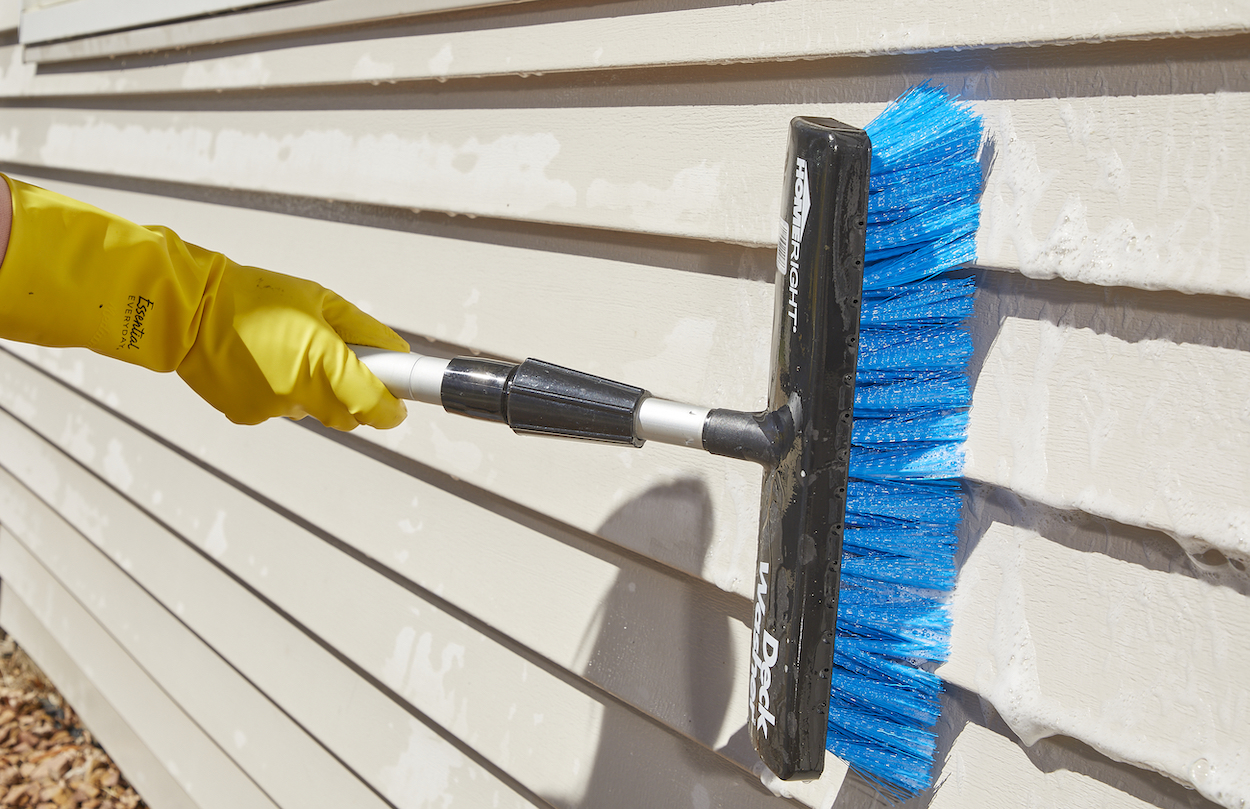
Know your stain: what you are covering and why it matters
Not all stains act the same. Some wipe off. Some bleed through paint. Others need a targeted fix before you try to hide them. Knowing the cause helps you choose the best method for how to cover up stains on vinyl siding.
Common stain types
- Mold and mildew look black or green and grow in shade and damp spots.
- Algae shows up as green film, often on the north side.
- Rust drips down from fasteners, flashing, or metal furniture.
- Tannin stains come from leaves, mulch, or wood runoff and look brown.
- Irrigation stains come from hard water and leave white or orange marks.
- Oil and grease leave dark, sticky spots near grills and driveways.
- Oxidation looks like chalky fade from UV wear.
What this means for cover-up
- Organic stains may return if you do not kill spores.
- Rust and tannin can bleed through paint without a stain-blocking primer.
- Hard water and metal stains need special cleaners to stop reappearing.
- Severe fade may need full repaint or panel replacement.
Safety, prep, and the right tools
A good cover-up starts with safe prep. This part is quick, but it saves time later and keeps your siding in good shape.
Safety checks
- Wear gloves and eye protection.
- If you use bleach or strong cleaners, protect plants with water and tarps.
- Avoid ladders on wet ground. Use a stable base or a scaffold.
Basic tools and supplies
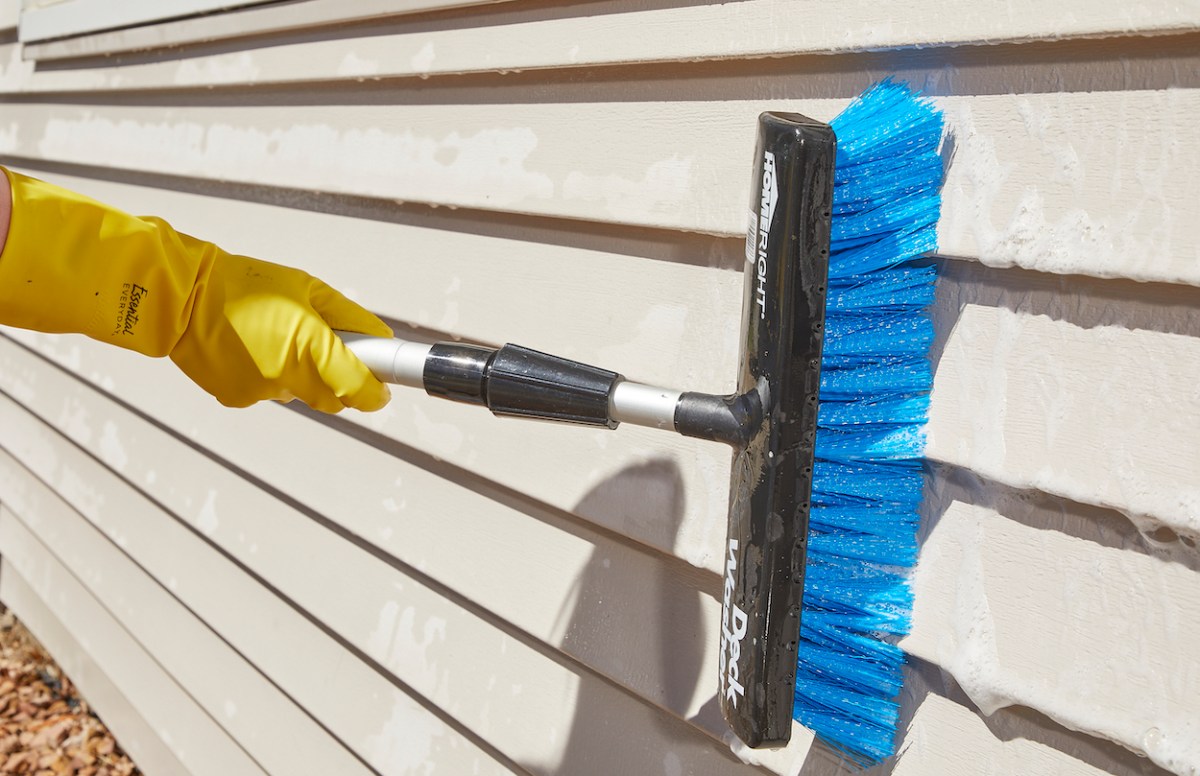
- Soft brush, sponge, and microfiber cloths.
- Garden sprayer and buckets.
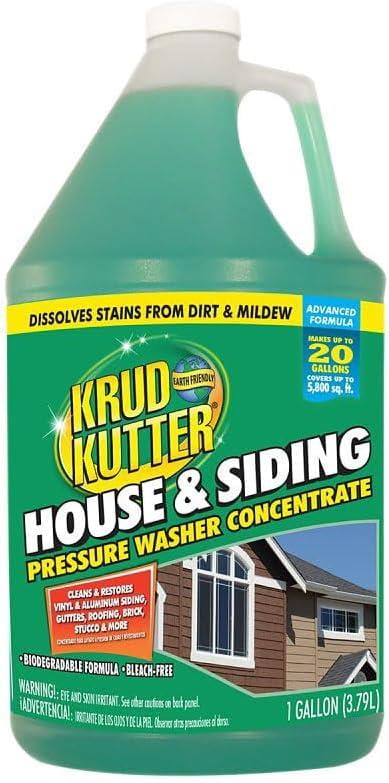
- Oxygen bleach or a siding-safe cleaner.
- Stain-specific cleaners for rust, hard water, or oil.
- Painter’s tape, plastic, and drop cloths.
- Color-matched caulk and small vinyl patch pieces.
- Primer that blocks stains and bonds to vinyl.
- Vinyl-safe exterior paint and a small sprayer or brush.
Tip from the field
- Work in shade or on a cool day. Hot sun dries cleaner too fast and leaves marks.
Clean before you cover: proven recipes and products
Cleaning first is the fastest way to make stains vanish. Even when you plan to paint, clean well so the finish sticks. This is a key step in how to cover up stains on vinyl siding.
Gentle wash method
- Rinse the area with a hose.
- Mix warm water with a small amount of dish soap.
- Scrub with a soft brush. Rinse well.
Mold, mildew, and algae
- Use oxygen bleach mixed with water per label. It is plant friendly.
- Keep the mix on the siding for 10 minutes. Do not let it dry.
- Scrub and rinse. Repeat for heavy growth.
Rust and hard water
- Use a rust remover made for exterior surfaces.
- Apply small amounts and rinse right away to avoid dull spots.
Oil and grease
- Use a degreaser or a citrus cleaner.
- Rinse until water runs clear. Paint will not stick to oil.
Pressure washer advice
- Low pressure only. Use a wide fan tip.
- Spray level or down. Do not shoot water up under laps.

Fast cover-ups that avoid painting
If cleaning leaves a shadow, you can hide it with small fixes. These are low mess options for how to cover up stains on vinyl siding.
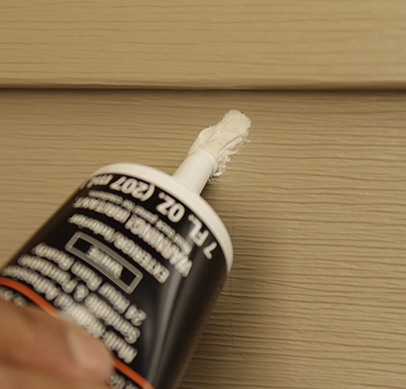
Color-matched caulk for small marks
- For tiny drill holes or rust halos, use exterior color-matched caulk.
- Smooth with a wet finger. Let it cure. It blends well from the street.
Replace a stained panel
- Use a siding zip tool to unlock the panel.
- Swap in a new piece from the same brand and color batch if you can.
- This gives a like-new look with no paint at all.
Add trim or an accent piece
- Wrap a stained corner with new vinyl trim.
- Add a small utility block or hose bib trim to hide a spot near faucets.
Use a vinyl-safe spray detail
- For small, stubborn areas, a vinyl-safe touch-up spray can blend tone.
- Mask a soft edge so the fix feathers into the field.
Painting vinyl siding to cover stains
Sometimes paint is the best path. It hides fade and tough stains fast. Here is how to cover up stains on vinyl siding with paint the right way.
Choose the right paint
- Use exterior acrylic urethane or vinyl-safe acrylic latex.
- Pick a light to medium color with a higher light reflectance value to avoid warping from heat.
Prime if needed
- Use a stain-blocking bonding primer on rust, tannin, or other bleed-prone spots.
- Spot-prime only where needed to keep the profile smooth.
Step-by-step painting
- Wash and rinse. Let it dry fully.
- Mask windows, lights, and trim.
- Spot-prime stains and glossy spots.
- Spray a thin coat. Back-brush seams if needed.
- Let it dry. Apply a second thin coat.
- Remove masking while the paint is slightly tacky for a clean line.
Pro tip
- Test a small area first. Make sure the new color does not cause heat issues on sunny walls.
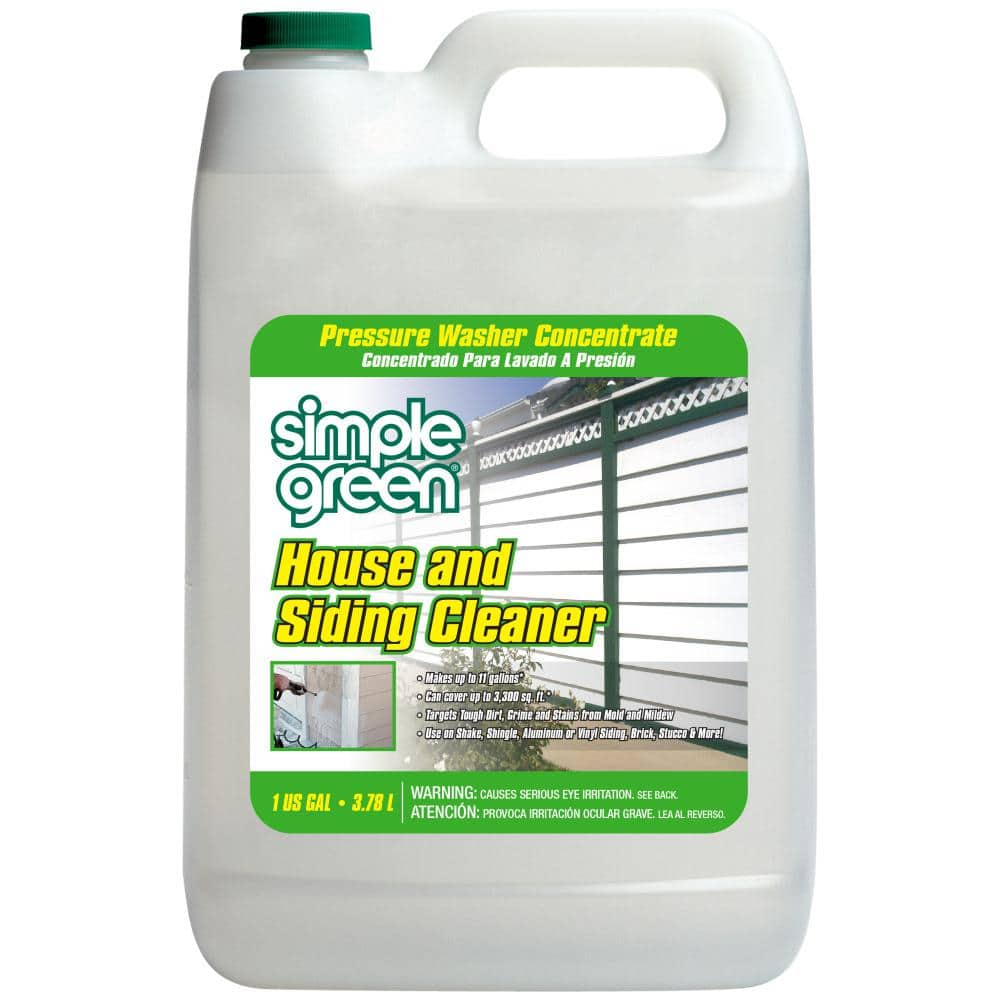
Color matching and blending tricks
The eye sees blend, not perfection. Small choices can make your cover-up seamless. This matters when learning how to cover up stains on vinyl siding.
Smart blending choices
- Feather edges with a soft, wide spray pattern.
- Stop paint lines at natural breaks like corners and trim.
- Use satin or low sheen. It hides small flaws better than gloss.
Matching old vinyl
- Sun fades vinyl over time. A new panel may not match.
- If the color is off, paint a full run from corner to corner.
- Keep a small record of the mix or color code for future touch-ups.

Long-term prevention so stains do not return
A strong finish means less work later. Once you learn how to cover up stains on vinyl siding, keep the face clean and dry.
Simple habits
- Rinse siding twice a year.
- Trim plants away by a foot or more.
- Aim sprinklers away from walls.
- Use rust-free fasteners and keep metal furniture off walls.
- Clean grill areas and use a splash guard.
Seasonal checks
- Look for loose panels and gaps that trap water.
- Seal small gaps around pipes and vents with color-matched caulk.
- Clear gutters so dirty water does not run down the siding.

Costs, time, and when to call a pro
Good planning sets the right budget and pace for how to cover up stains on vinyl siding.
Typical costs
- Cleaning supplies: low cost.
- Spot primers and caulk: low cost.
- Touch-up spray or small paint kit: low to medium cost.
- Panel replacement: medium cost per panel, plus tools if needed.
Time needed
- Cleaning a side of a home: a few hours.
- Spot cover-ups: one to two hours.
- Painting one wall: half a day to a day, with drying time.
Call a pro if
- You see warping, big cracks, or moisture behind panels.
- Dark color changes are planned on hot, sunny walls.
- You need safe work at height or have complex trim details.
Real-world lessons from the job site
Experience helps avoid repeat work. Here is what I have learned while showing homeowners how to cover up stains on vinyl siding.
What works
- Oxygen bleach for green growth. It cleans without harsh fumes.
- Spot-priming rust before paint. It stops bleed-through cold.
- Feathered spraying and corner-to-corner breaks. This hides color shift.
What to avoid
- Skipping the wash step. Paint will peel.
- High-pressure washing under laps. It drives water behind the siding.
- Dark, heat-absorbing colors on south walls. Vinyl can warp.
A quick story
- A client had orange streaks from sprinklers. Cleaning helped, but a faint line stayed. We used a rust remover, then spot-primed the streaks, and sprayed a light, vinyl-safe topcoat from corner to corner. The wall looked brand new, and the new sprinkler heads solved the cause.
Frequently Asked Questions of how to cover up stains on vinyl siding
Can I paint over vinyl siding without primer?
Yes, if the surface is clean and the stain does not bleed. For rust or tannin, use a stain-blocking bonding primer on those spots first.
Will pressure washing damage vinyl siding?
It can if you use high pressure or spray upward. Use low pressure, a wide fan tip, and keep the nozzle at least a foot away.
What is the best cleaner for mold on vinyl?
Oxygen bleach is gentle and effective. Let it dwell for 10 minutes, scrub, and rinse well.
How do I match a faded vinyl color?
New panels may not match old, sun-faded siding. Blend by painting corner to corner, or repaint the full wall for a uniform look.
Can dark paint colors warp vinyl siding?
Yes, dark colors can absorb heat and cause warping. Choose vinyl-safe colors with higher light reflectance to reduce heat buildup.
Is painting or panel replacement better for small stains?
For tiny areas, replacement or color-matched caulk may be fastest. If stains are widespread, painting the full wall gives an even result.
How long will a painted finish last on vinyl?
With proper cleaning and vinyl-safe paint, it can last many years. Keep the surface clean and fix water issues to extend life.
Conclusion
You can restore curb appeal with a smart plan and simple steps. Clean first, target the stain type, then choose the right cover-up: caulk, a new panel, or vinyl-safe paint. With these methods, you now know how to cover up stains on vinyl siding in a way that looks clean and lasts.
Take the next step this weekend. Pick one wall, gather a small kit, and try a test spot. If this helped, subscribe for more home care tips or share your questions in the comments.