
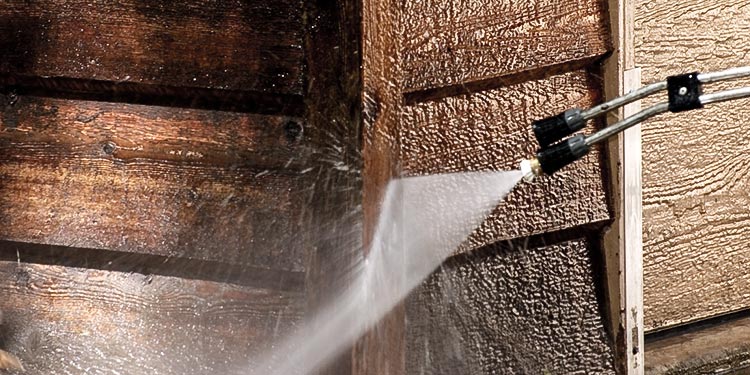
Use mild soap, soft brushing, and a low-pressure rinse to clean wood siding.
If you want to know how to clean wood siding without stripping finish or raising grain, you’re in the right place. I’ve cleaned cedar, redwood, and pine cladding across wet coasts and dry interiors. In this guide, I’ll show you how to clean wood siding the right way, with clear steps, safe products, and pro-level tips that save time and protect your home.

What Makes Wood Siding Different?
Wood is porous and organic. It soaks up water and can grow mold. It also has natural oils and tannins that react to strong chemicals. That is why harsh bleach or high pressure can harm it fast.
Clapboard, shingles, and board-and-batten all have gaps and joints. Dirt and algae hide in those edges. Sun and rain hit each face in different ways. A smart plan respects wood grain, finish type, and climate. When you learn how to clean wood siding with that in mind, you get better results and longer life.
Key points to remember:
- Work with the grain, not across it.
- Keep water under control to avoid forcing moisture behind boards.
- Use cleaners made for wood. Avoid products that burn or bleach fibers.
- Rinse well and let the siding dry fully before sealing or staining.
Learning how to clean wood siding is not hard. It takes gentle tools, safe cleaners, and patience.
Tools and Materials You’ll Need
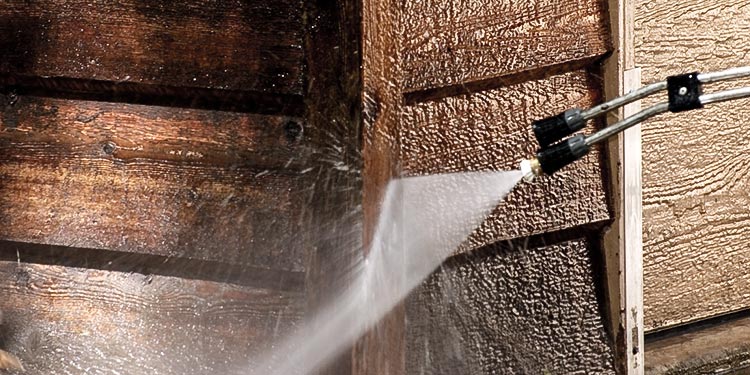
Gather your gear before you start. Simple tools work best.
- Soft-bristle brush with a long handle
- Garden hose with a spray nozzle or a low-pressure washer
- Buckets for mixing cleaner and rinse water
- Oxygen bleach powder (sodium percarbonate) or a wood-safe cleaner
- Mild dish soap or surfactant to lift grime
- Pump sprayer for even application
- Microfiber cloths and sponge
- Painter’s tape and plastic to cover fixtures and plants
- Protective gear: gloves, eye protection, mask
- Optional: wood brightener for tannin stains
When people ask how to clean wood siding fast, they expect power tools. But many jobs need only a brush, a bucket, and time.

Prep and Safety Checklist
Preparation prevents mistakes and damage.
- Pick a cool, overcast day. Avoid hot sun and wind that dry cleaner too fast.
- Move patio items, close windows, and turn off exterior power to outlets.
- Pre-rinse plants and cover delicate shrubs with breathable fabric.
- Test your cleaner on a small, hidden spot. Check for color change.
- Work from bottom to top when applying cleaner. Rinse from top to bottom.
If you wonder how to clean wood siding near windows and doors, go slow. Keep water spray horizontal or slightly down. Do not spray up under laps or into vents.
Step-by-Step: How to Clean Wood Siding
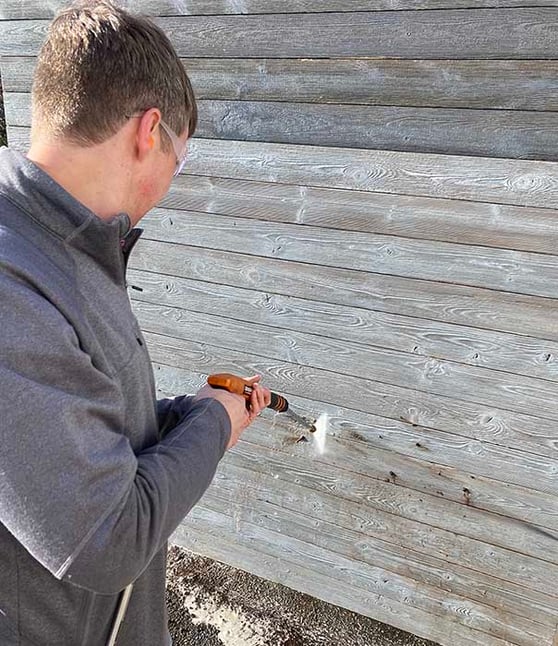
Follow these steps for a safe, thorough clean.
- Dry clean first
- Sweep off dust, cobwebs, and loose debris with a soft brush.
- Knock off light algae with the dry brush to reduce smearing.
- Mix a wood-safe cleaner
- In a bucket, combine warm water with oxygen bleach per label.
- Add a small amount of dish soap to help lift grime.
- Stir until dissolved. Do not mix with ammonia or acids.
- Wet the siding
- Lightly mist the wall with clean water. This helps the cleaner spread and reduces blotches.
- Apply cleaner
- Use a pump sprayer to coat 3–5 linear feet at a time.
- Let dwell for 5–10 minutes. Keep it wet. Do not let it dry on the surface.
- Agitate gently
- Scrub with a soft-bristle brush, moving with the grain.
- Focus on joints, drip edges, and shaded zones where algae grows.
- Rinse well
- Rinse from the top down with a garden hose or very low pressure.
- Keep the nozzle at a safe distance so water does not drive behind boards.
- Spot treat stains
- For mildew that lingers, reapply oxygen bleach and dwell longer.
- For rust or black streaks, use a wood brightener per directions.
- Final check
- Rinse plants and hardscape. Remove covers and tape.
- Let the wall dry 24–48 hours before sealing or staining.
Real-life tip: On a cedar bungalow I clean each spring, I split the job into small sections. I apply cleaner, brush, and rinse in 10-minute cycles. That keeps dwell even and avoids lap marks.
PAA-style quick answers:
Can I clean wood siding with a pressure washer?
Yes, but use low pressure, wide fan tips, and keep your distance. If you are unsure, stick to a hose and brush.
Will vinegar clean wood siding?
A mild vinegar solution can help with light algae. For deeper mildew or grime, oxygen bleach is safer and more effective.
How often should I clean wood siding?
Once a year is a good target. In damp or shaded areas, spot clean mid-season as needed.
Cleaning Solutions: DIY vs Store-Bought
When readers ask how to clean wood siding without harsh bleach, I suggest oxygen bleach. It lifts stains and kills organic growth without stripping color. It breaks down into oxygen and soda ash, so it is plant-friendly when used right.
DIY mixes that work:
- Oxygen bleach solution: Follow label, often 1–2 cups per gallon of warm water.
- Mild soap wash: 1 tablespoon dish soap per gallon of water for light dirt.
- Vinegar rinse: 1 part white vinegar to 3 parts water for algae on painted wood.
Store-bought wood cleaners:
- Look for “wood-safe,” “siding,” or “deck” cleaners with surfactants and oxygen bleach.
- Avoid chlorine bleach on raw or stained wood. It can strip color, raise grain, and leave salt that attracts moisture.
Always test first. Do not mix chemicals. Read labels. If you have questions about how to clean wood siding with a product you already own, check for words like non-caustic, non-acidic, and wood-safe.

Special Cases and Stain Removal
Not all stains are the same. Tackle the root cause.
- Mold and mildew: Use oxygen bleach. Let it dwell longer in shade. Rinse well.
- Algae and moss: Gently brush off top growth. Apply cleaner twice if needed.
- Tannin bleed and dark streaks: Use a wood brightener (oxalic acid). Follow directions and rinse.
- Rust near nails: Spot treat with a brightener. Replace corroded fasteners with stainless or coated screws.
- Sap or pitch: Scrape gently with a plastic scraper when cool. Spot clean with mineral spirits if finish allows, then rinse.
A lesson learned: On a lakeside cabin, I tried to rush tannin stains with pressure. I etched the soft earlywood. A brightener and a gentle brush would have been faster and safer. That day taught me how to clean wood siding with patience, not force.

Pressure Washing Wood Siding the Right Way
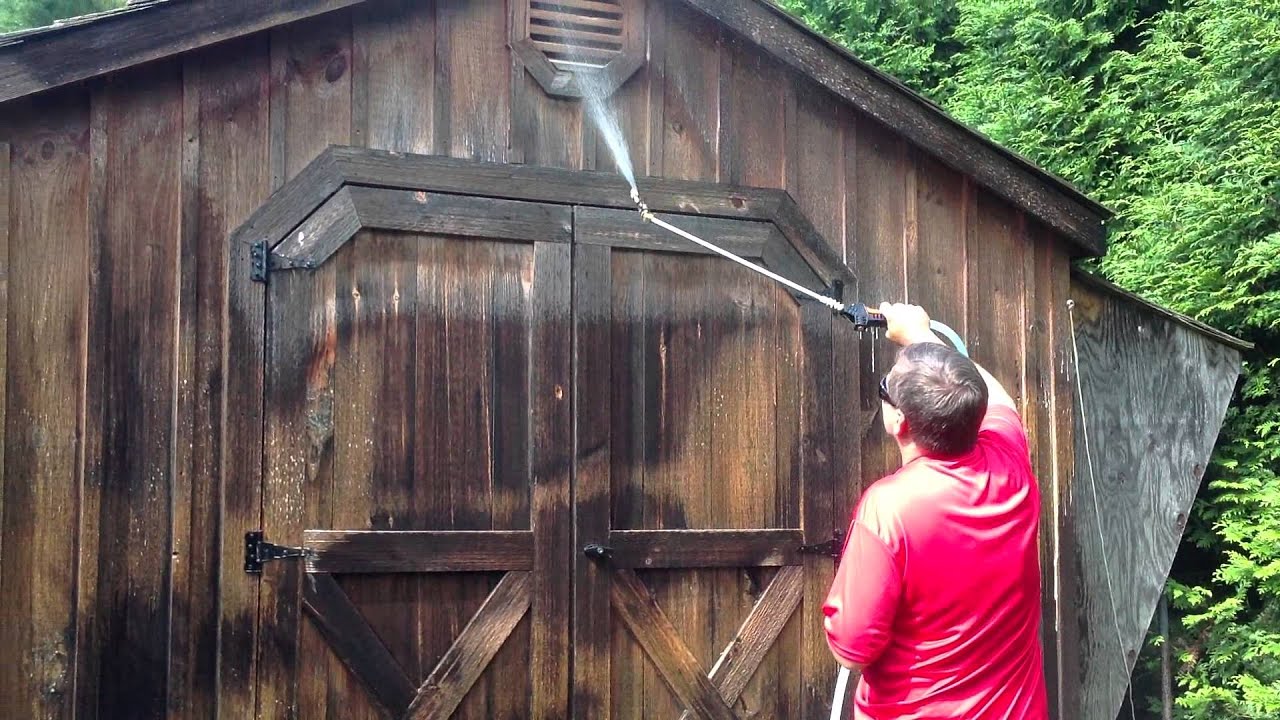
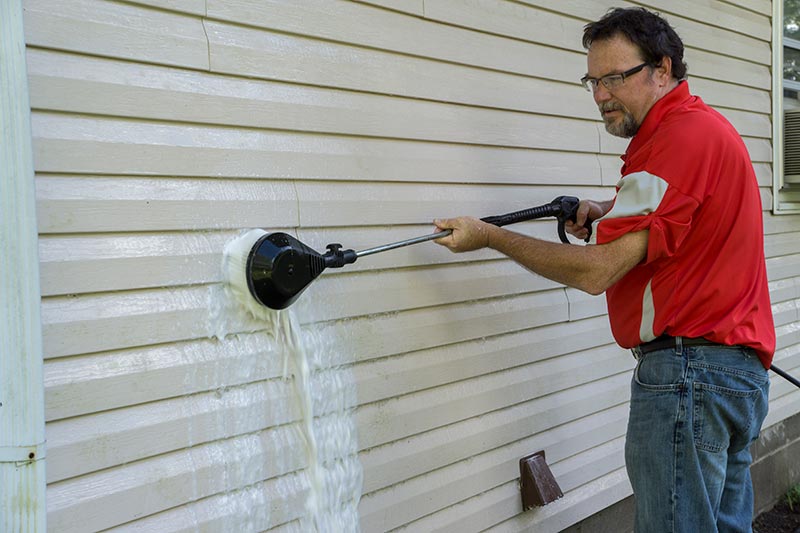
Pressure washing can help, but it can also gouge wood. Use it as a rinse, not as the main cleaner.
Recommended settings:
- Pressure: 500–800 PSI for softwoods like cedar and pine; up to 1,000 PSI for hardwoods if finished.
- Tip: 40-degree or wider fan, never a pinpoint.
- Distance: Keep 12–18 inches away and move in smooth passes.
- Angle: Aim slightly downward, with the grain, and never under laps.
- Motion: Keep the wand moving. Do not linger on knots or edges.
If you ask how to clean wood siding with a pressure washer and not raise grain, the answer is low pressure, wide tip, and a pre-clean with brush and oxygen bleach. The washer is for rinsing only.
Drying, Inspection, and Aftercare
Dry time matters. Many finishes need 24–48 hours of dry weather after washing. Wood moisture should be low before you stain or paint.
Post-clean steps:
- Inspect caulk joints and end-grain cuts. Reseal as needed.
- Check flashings, drip caps, and weep gaps for clogs.
- Plan finish work. Transparent stains show more grain. Solid stains cover more flaws.
Knowing how to clean wood siding also means knowing when to refinish. If water no longer beads on the surface, it is time to recoat.

Maintenance Schedule and Seasonal Checklist
A simple plan keeps your siding healthy.
Spring
- Wash shaded sides and north faces first.
- Trim plants 6–12 inches from walls to improve airflow.
Summer
- Spot clean under eaves where dust builds.
- Check sprinklers to avoid wetting the siding.
Fall
- Remove leaves and debris from corners.
- Wash away pollen and soot before winter.
Winter
- Brush off wind-blown dirt on dry days.
- Inspect for ice dams above siding.
If you manage rentals or cabins, share a short guide with guests. It can note how to clean wood siding if a spill or mark happens.
Real-World Tips From the Field
Lessons learned from years on ladders:
- Work small areas. Cleaner stays wet. Results stay even.
- Start low with cleaner application. Rinsing top-down avoids streaks.
- Protect plants. Pre-soak and rinse again after you finish.
- Keep extra brushes. Swap to a clean brush as the first gets dirty.
- Document the process. Photos help you see what worked and what to change next time.
On one project, a homeowner asked how to clean wood siding that had gray weathering but also fresh algae. We cleaned with oxygen bleach, brightened the gray to even the tone, then used a penetrating stain. The home looked new, and the finish lasted because the prep was careful.
Cost, Time, and Environmental Considerations
Time
- A 2,000-square-foot home often takes one full day with two people.
- Add extra time for spot stains and brightening.
Cost
- DIY supplies: $40–$120 for cleaner, brushes, and tape.
- Pro service: Varies by region and height. Expect a few hundred to over a thousand.
Environment
- Choose oxygen-based cleaners. They are effective and plant-friendly when used as directed.
- Capture runoff where possible on steep grades.
- Avoid chlorine bleach on bare wood. It harms fibers and nearby plants.
If budget is tight and you still want to know how to clean wood siding well, start with a garden hose, a soft brush, and oxygen bleach. That simple kit is low-cost and high-value.
Troubleshooting: What If Something Goes Wrong?
Common issues and quick fixes:
- Raised grain or fuzzing: You used too much pressure. Let it dry, then lightly sand with 120–150 grit. Seal to lock fibers down.
- Lap marks or blotches: Cleaner dried too fast. Re-wet, reapply, and keep shaded. Work smaller sections.
- White film after drying: Cleaner residue. Rinse again. Use clean water and a gentle brush.
- Persistent black spots: Likely mildew in pores. Reapply oxygen bleach. Increase dwell time.
- Water intrusion: You sprayed upward. Stop, let dry, and inspect flashings and caulk.
These tips reflect how to clean wood siding in real settings, not just in a lab. The fixes are simple when you catch problems early.
Frequently Asked Questions of how to clean wood siding
How often should I wash wood siding?
Once a year suits most homes. In damp or shaded spots, clean problem areas mid-season.
What is the safest cleaner for wood siding?
Oxygen bleach is safe and effective on mold and grime. It cleans without stripping color when used as directed.
Can I use bleach on cedar or redwood?
Avoid chlorine bleach on bare or stained wood. It damages fibers and can cause blotches.
Is pressure washing always risky for wood?
It is safe at low pressure with a wide fan tip and steady motion. Use it as a rinse after a brush clean.
How long must wood dry before staining after cleaning?
Wait 24–48 hours in mild weather. Longer in cool, humid conditions.
Will vinegar remove mold on wood siding?
Vinegar helps with light algae. For true mildew, oxygen bleach works better.
Do I need to cover plants when cleaning?
Yes. Pre-wet plants, cover delicate ones, and rinse them again when done.
Conclusion
Clean wood siding lasts longer, looks better, and protects your home. Use gentle tools, wood-safe cleaners, and steady steps. Work small sections, rinse well, and let it dry before you refinish.
If you found this guide helpful, try one wall this weekend and build your rhythm. Share your results, ask questions, or subscribe for more step-by-step home care guides.