
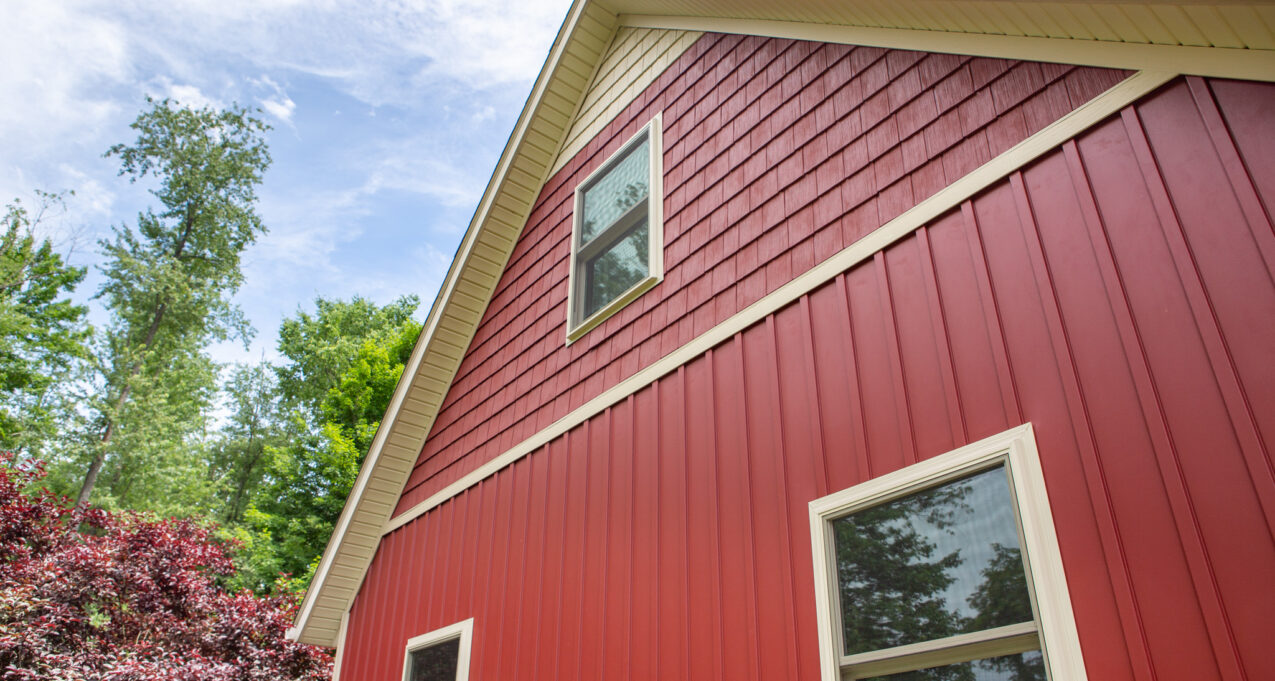
James Hardie beats vinyl for durability, fire safety, and curb appeal; vinyl wins on cost.
Choosing between james hardie siding vs vinyl siding shapes how your home looks, lasts, and sells. I have guided hundreds of exterior remodels, and I know where each shines. This guide breaks down james hardie siding vs vinyl siding with real numbers, field-tested tips, and clear steps so you can pick with confidence.
What sets James Hardie siding and vinyl siding apart?
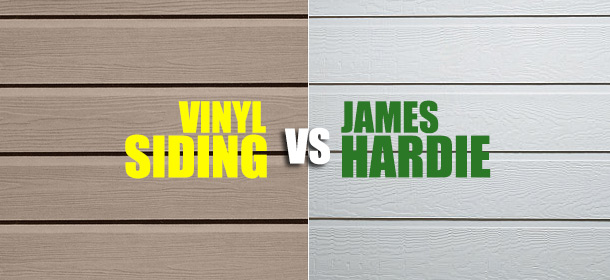
James Hardie is a brand of fiber cement siding. It is a mix of cement, sand, and cellulose. It looks like wood, but it does not rot or burn. Vinyl siding is PVC plastic. It is light, fast to install, and costs less.
Here is the core difference in one line: when you weigh james hardie siding vs vinyl siding, you trade higher upfront cost for greater strength, fire safety, and upscale looks.
Key comparisons:
- Material makeup. Fiber cement is dense and rigid. Vinyl is flexible and hollow.
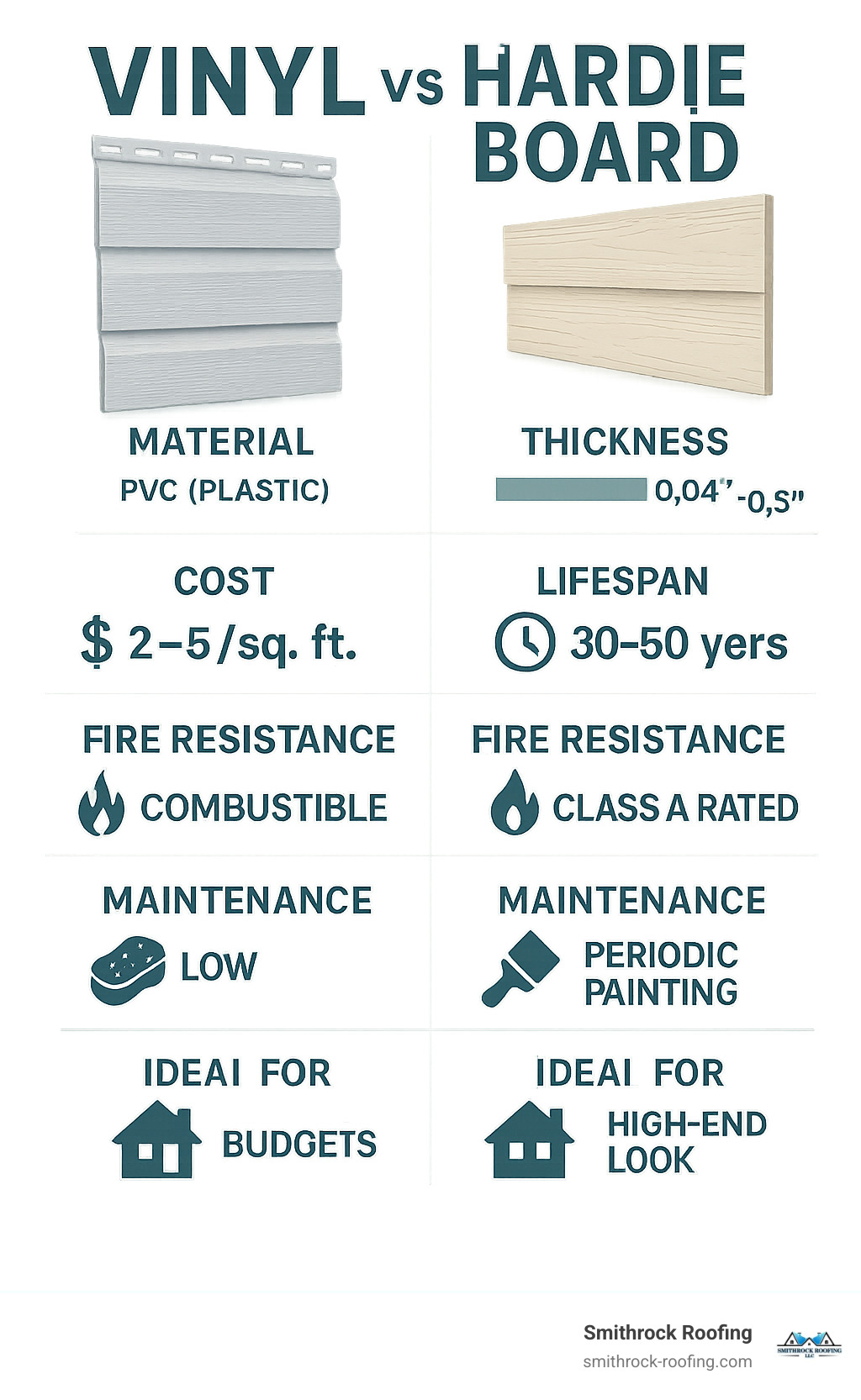
- Fire. Fiber cement is non-combustible and holds a Class A fire rating. Vinyl can melt and burn.
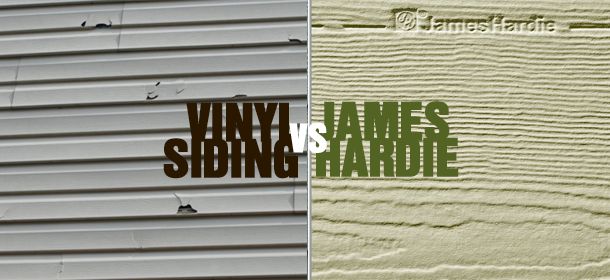
- Impact and heat. Fiber cement resists hail and heat better. Vinyl can crack in hail and can warp near grills or strong sun.
- Moisture. Both resist rot, but fiber cement does not warp. Poor vinyl installs can trap water behind panels.
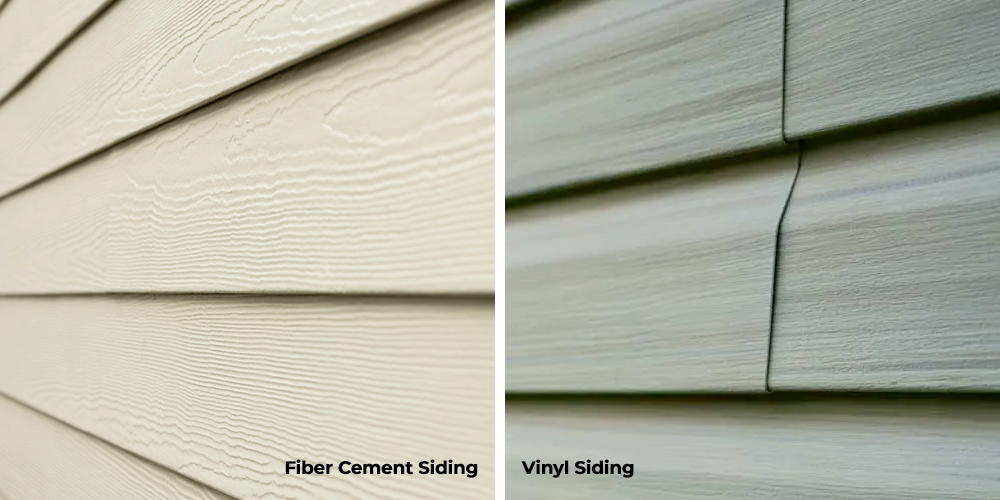
- Style. James Hardie offers crisp wood-like lines and deep textures. Vinyl has more visible seams, though premium lines hide them better.
- Weight and install. Fiber cement is heavy and needs special blades and safety steps. Vinyl is fast and simple to hang.
From a practical view, james hardie siding vs vinyl siding is a premium vs value choice. If you want long life and top curb appeal, fiber cement stands out. If you want low first cost and fast install, vinyl fits.
Cost breakdown and long-term value
Upfront costs vary by region and crew skill. Current averages I see on bids and invoices:
- Vinyl siding installed: about $4 to $8 per square foot.
- James Hardie fiber cement installed: about $10 to $15 per square foot.
- Trim, soffits, and complex walls add more to both.
But total cost of ownership tells the full story in the james hardie siding vs vinyl siding debate:
- Paint and finish. Factory ColorPlus on James Hardie carries a 15-year finish warranty. Expect repaint around 12 to 15 years for field-painted boards. Vinyl never needs paint, but color fade and warping can call for panel swaps.
- Repairs. Fiber cement shrugs off hail and yard-impact dings better. I see fewer call-backs after storms. Vinyl repairs are cheap per panel but more common in harsh climates.
- Resale value. National remodeling surveys show fiber cement siding delivers a higher cost recoup than vinyl at resale. Recent results put fiber cement in the high 80% range and vinyl near 80%, though numbers shift by market.
A quick example from my files:
- 2,000 sq ft of wall area.
- Vinyl at $6/sq ft: about $12,000.
- James Hardie at $12/sq ft: about $24,000.
- Over 15–20 years, lower repair frequency and stronger resale often close that gap, especially in hail or high-fire-risk areas.
When you judge james hardie siding vs vinyl siding on pure budget, vinyl wins. On value over time, fiber cement often pulls ahead.
Durability, weather, and fire performance
My field notes say this is where james hardie siding vs vinyl siding sets apart fast.
Weather and impact:
- Hail. Fiber cement holds up to moderate hail with minor marking. Vinyl can crack or shatter in cold hail.
- Wind. Both can meet high-wind ratings when installed to code. Fiber cement feels more solid in gusts and resists flutter.
- Heat and UV. Vinyl can warp under strong sun or near grills. Fiber cement handles heat with ease.
Fire and safety:
- Fiber cement is non-combustible. It will not ignite and can help meet wildfire code paths.
- Vinyl softens and can ignite. It can melt from nearby heat sources and gives off dense smoke.
Moisture and pests:
- James Hardie resists rot, termites, and woodpeckers. It stays straight.
- Vinyl will not rot, but it can trap moisture if flashing or housewrap is wrong. I have opened walls with mildew behind bad vinyl installs. Detailing matters.
In hard climates, the durability edge in james hardie siding vs vinyl siding is clear. Fiber cement offers steady, quiet strength you can feel.
Aesthetics and curb appeal
If you want a wood look without wood stress, fiber cement wins. That shows up in appraisals and buyer reactions.
Style options:
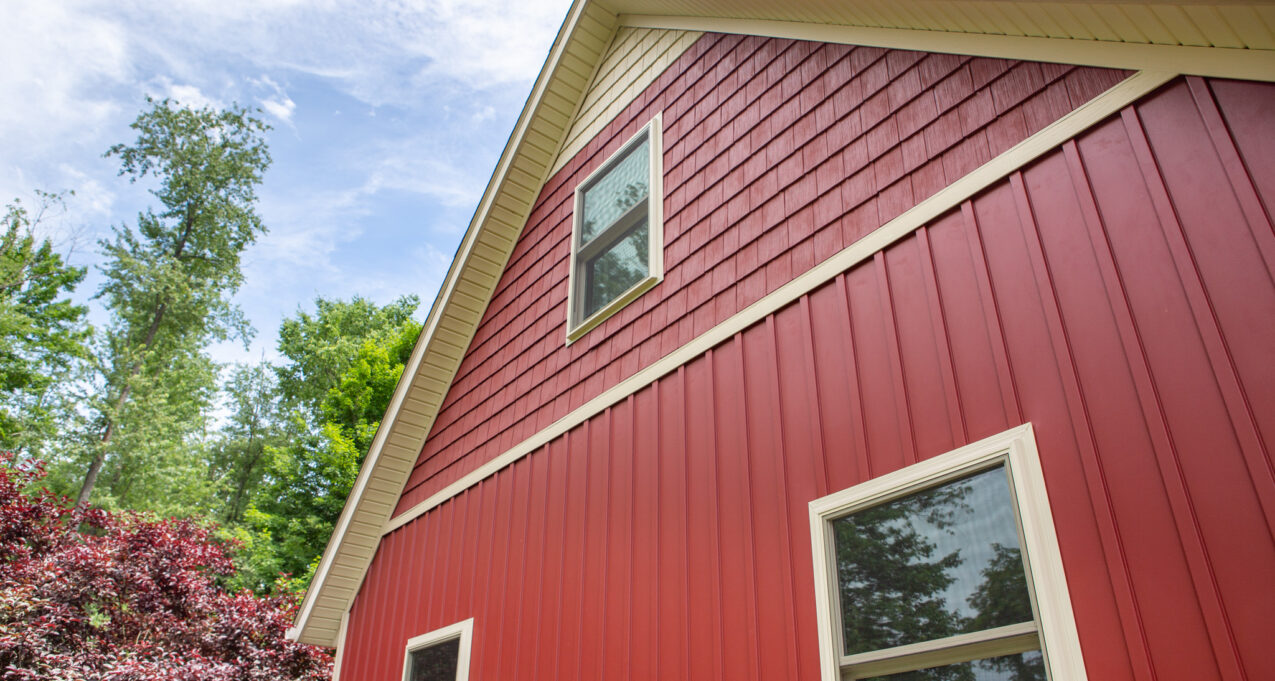
- James Hardie offers lap, board-and-batten, shingle, and panel systems with sharp shadow lines. Trim kits match for a custom look.
- Vinyl has many profiles too, but seams show more on long walls. Premium vinyl reduces seams with longer panels.
Color and finish:
- James Hardie ColorPlus is baked on. It resists fade and chalk with a strong warranty.
- Vinyl is color-through. It does not peel, but dark colors can deform if heat builds. Modern co-extrusion helps, yet physics still applies.
Neighborhoods and HOAs:
- I have seen historic boards approve fiber cement when vinyl was denied. That can matter for permits and resale.
So, for pure curb appeal, the nod in james hardie siding vs vinyl siding goes to fiber cement.
Energy efficiency and comfort
Siding alone has a small R-value. Your wall assembly does the heavy lifting.
What to know:
- Standard vinyl siding adds a small R-value, often around R-0.6. Insulated vinyl can add about R-2 to R-3.
- Fiber cement is thin and dense, around R-0.3 to R-0.5.
- The bigger wins come from continuous exterior insulation, sealed sheathing, and taped housewrap.
Pro tip from many blower-door tests I have watched: Focus on air sealing, window flashing, and rigid foam if your climate needs it. In energy math, that beats the small R-value edge vinyl holds. When people ask about james hardie siding vs vinyl siding and energy, I steer them to the envelope details first.

Installation, maintenance, and warranties
Install method and crew skill decide performance. This is a key checkpoint in the james hardie siding vs vinyl siding choice.
Installation:
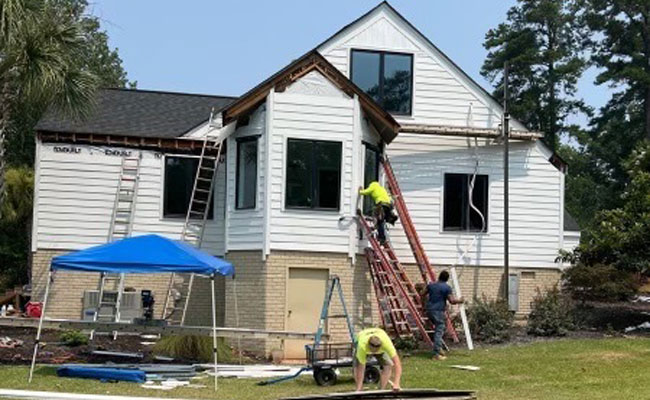
- Fiber cement needs special blades, careful cuts, and dust control for silica. Crews carry boards in pairs and fasten to specs. Good flashing is vital.
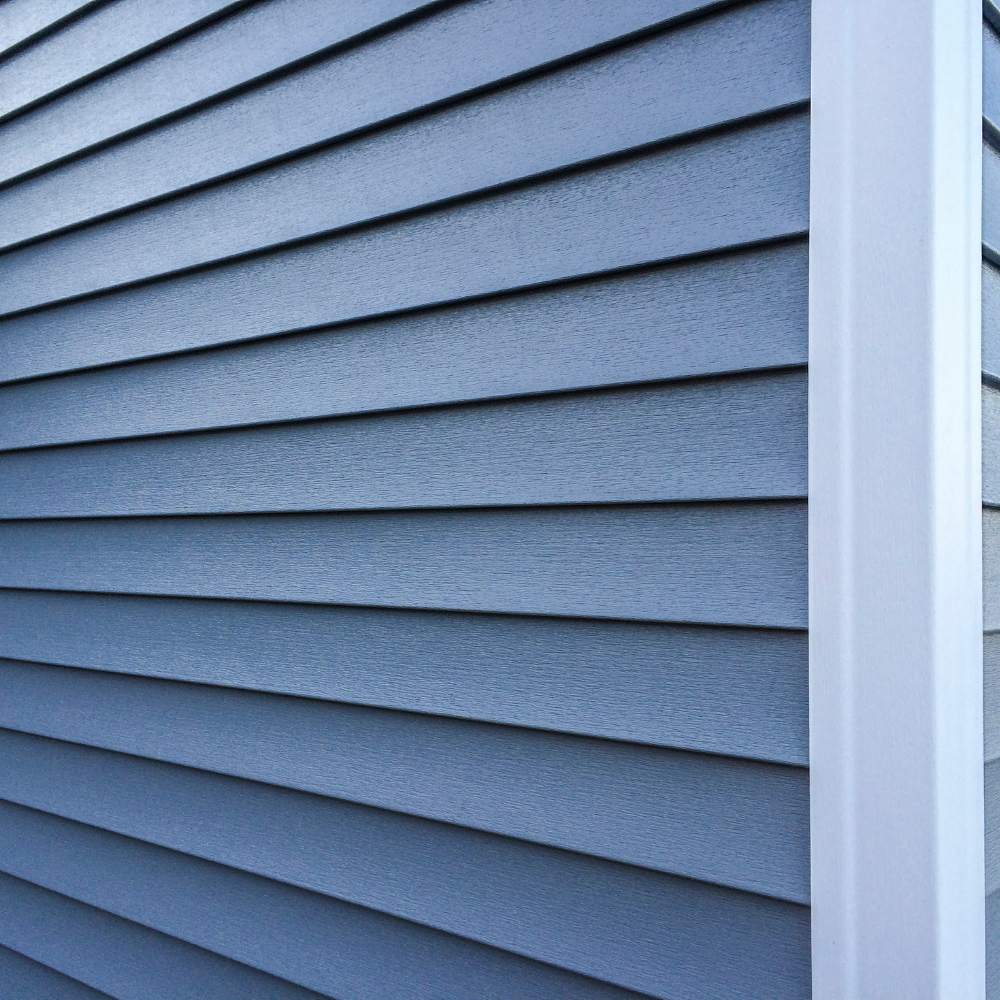
- Vinyl hangs from nails and can move with temperature. It is lighter and faster. J-channels and trim must shed water.
Maintenance:
- James Hardie with ColorPlus needs low care for many years. Clean with a gentle wash. Plan for repaint on a long cycle if field-painted.
- Vinyl needs washdowns to remove dust and algae. Watch for loose panels after storms.
Warranties:
- James Hardie offers a 30-year transferable product warranty and a 15-year finish warranty on ColorPlus.
- Vinyl makers often offer limited lifetime warranties that vary by line and pro rating. Read the labor and fade clauses.
Pick a certified crew. My best jobs came from installers trained on the system. That holds true for both products.
Environmental impact and sustainability
Many readers ask where james hardie siding vs vinyl siding lands on sustainability. The answer is nuanced.
- Fiber cement uses cement, sand, and wood fibers. Cement has a high energy footprint, but the boards last a long time and are non-combustible. Long life reduces replacement waste.
- Vinyl is PVC-based. It uses petrochemicals and chlorine. It is light to ship and easy to install, which lowers transport and site waste. End-of-life recycling is limited in many areas.
Health and safety:
- Fiber cement cutting releases silica dust. Crews must use capture tools and PPE.
- Vinyl fires and high heat can release smoke and gases. Follow grill clearances and local codes.
If your top goal is fire resistance and long life, fiber cement has a strong case. If transport and install footprint matter most, vinyl has a smaller shipping load.
Which one should you choose? A simple use-case guide
Here is my fast guide from years of bids, site walks, and punch lists. Use it to frame your choice of james hardie siding vs vinyl siding.
Choose James Hardie if:
- You live in hail country, wildfire zones, or high-UV areas.
- You want a premium wood look and higher resale.
- You plan to stay long term and value lower repair risk.
Choose vinyl if:
- You need the most budget-friendly path now.
- You want a quick install with minimal disruption.
- You are okay with a lighter look and may upgrade later.
Mixed approach I often suggest:
- Do James Hardie on street-facing fronts for curb appeal.
- Use premium vinyl on sides and rear to manage cost.
- Add rigid foam and great flashing everywhere. That is the secret sauce.
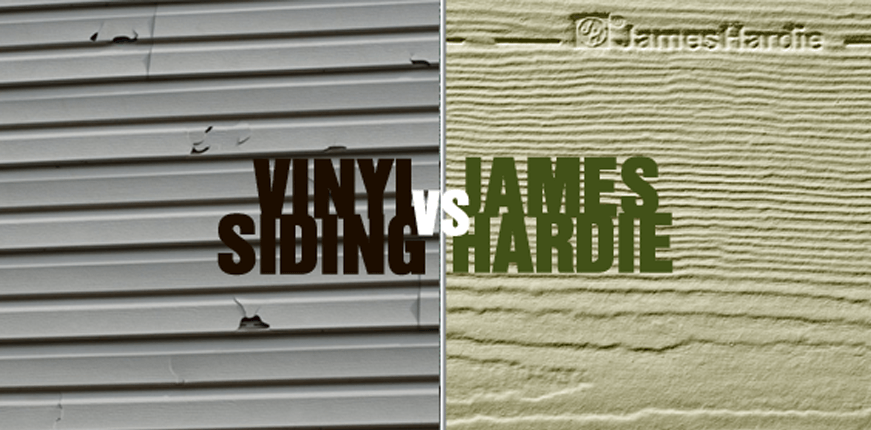
Source: homescapesofne.com
Frequently Asked Questions of james hardie siding vs vinyl siding
Is James Hardie more expensive than vinyl?
Yes. Expect roughly $10–15 per square foot installed for fiber cement and $4–8 for vinyl. Complex walls, trim, and markets can shift these ranges.
Which lasts longer in harsh weather?
Fiber cement. It resists hail, heat, and wind better and stays straighter over time. Vinyl can crack in cold hail and warp near heat.
How do the warranties compare?
James Hardie offers a 30-year product warranty and 15-year finish coverage on ColorPlus. Vinyl lines have limited lifetime warranties that vary, so read fade and labor terms.
Which is better for fire-prone areas?
Fiber cement. It is non-combustible and holds a Class A rating. Vinyl can melt and ignite under high heat.
Do either options improve energy efficiency a lot?
Not by themselves. Insulated vinyl adds some R-value, but air sealing and exterior insulation deliver bigger gains. Focus on flashing, housewrap, and continuous insulation.
Can I paint both?
You can paint fiber cement easily, and factory ColorPlus arrives finished. Vinyl can be painted with the right coating, but color choice and heat buildup need care.
What about noise reduction?
Fiber cement is denser and cuts outside noise more than vinyl. If road noise bugs you, that extra mass helps.
Conclusion
When you weigh james hardie siding vs vinyl siding, decide what matters most today and in 15 years. If you want stout, fire-safe, high-end curb appeal, fiber cement pays off. If you need a clean update at the best price, vinyl is hard to beat.
Walk your walls, set a budget range, and match the product to your climate. Get two bids from certified installers for each system, with clear details on flashing, trim, and warranties. Ready to plan your project? Save this guide, compare quotes side by side, and subscribe for more exterior tips that protect your home and wallet.