
Hot‑dipped galvanized or stainless ring‑shank nails are best for Hardie siding.
You only hang fiber‑cement once, so the fasteners must be right. If you have ever watched paint bubble, siding shift, or nail heads rust through a neat lap, you know the wrong nail turns a weekend job into a warranty headache. The best nails for Hardie siding hold tight through wind, rain, and decades of freeze‑thaw. They resist corrosion, drive clean with a 15‑degree coil nailer, and meet current install rules. In this guide, I cut through the jargon and show what actually works in the gun and on the wall, whether you live inland or near salt air.
Metabo HPT Coil Siding Nails…
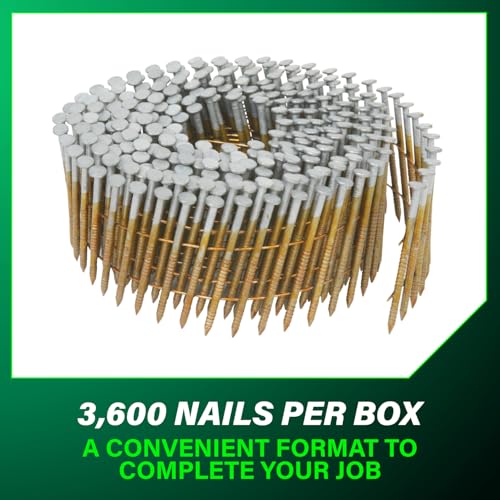
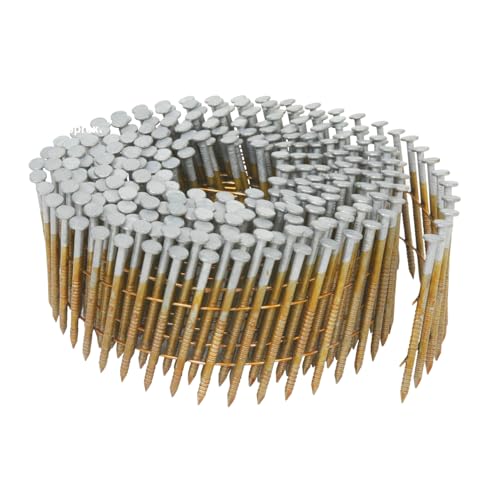
ENGINEERED FOR SIDING POWER: These 1-3/4″ x .092 coil siding nails are designed for metal siding, sheathing, decking, and fencing. With reliable holding strength and hot dipped galvanized coating, they…

Metabo HPT Siding Nails |…
TYPE: Full Round Head Hot Dipped Galvanized Ring Shank Wire Coil Siding Nails APPLICATION: Provides excellent holding power for siding, sheathing, decking and fencing COUNT: 3,600 per box LENGTH: 2…

Simpson Strong-Tie T6PCS1 Fiber-Cement Siding…
Checker pattern on heads blends with faux wood grain, reduces glare from sunlight and accepts surface finishes Annular ring shank increases withdrawal resistance to provide a secure attachment Diamond point…
Metabo HPT 1-3/4″ HDG Coil Siding Nails

These Metabo HPT 1-3/4 inch x .092 hot‑dipped galvanized ring‑shank coil nails are a workhorse choice for fiber‑cement. They are wire‑collated at 15 degrees for most siding guns and carry a full round head for consistent hold. The hot‑dipped galvanizing stands up to moisture better than electro‑galv, which matters on cut edges and windy faces. The ring shank reduces pop‑outs on studs and through sheathing.
In practice, these feed smoothly and set flush when you tune depth right. The 1-3/4 inch length is a sweet spot for many wall stacks, giving solid penetration into wood while staying precise during blind nailing. I get very few jams, and the heads don’t shear or mushroom when driven into HardiePlank. If you need volume for a full house wrap, the 3,600‑count box keeps the gun running.
Pros:
- Hot‑dipped galvanized coating for strong corrosion resistance
- Ring shank grip reduces siding creep and wind lift
- Feeds reliably in 15‑degree coil nailers
- Consistent head size for neat, flush seating
- Good length for blind nailing many wall assemblies
- Bulk pack is cost‑effective for big jobs
Cons:
- Not stainless; coastal salt spray may need 304 or 316 SS
- 1-3/4 inch may be short for thick sheathing stacks
- Wire collation can leave minor wire stubs if depth is off
My Recommendation
If you need dependable, code‑friendly fasteners for most inland or mild coastal zones, these are an easy pick. They hit the spec that pros expect for fiber‑cement: 15‑degree coil, ring shank, and hot‑dipped galvanized. They are among the best nails for hardie siding when you want value and volume without giving up hold or coating quality. For heavy salt air, step up to stainless below; otherwise, this box pays off on production schedules.
| Best for | Why |
|---|---|
| Inland fiber‑cement lap siding | HDG coating resists rust; ring shank locks into studs |
| Blind nailing HardiePlank | 1-3/4″ length drives flush with strong hold |
| High‑volume installs | Reliable feeding and big 3,600‑count coils |
Metabo HPT 2″ HDG Coil Siding Nails

When your wall stack is thicker or you want extra bite into framing, the Metabo HPT 2 inch x .092 hot‑dipped galvanized ring‑shank coils deliver. The extra 1/4 inch may not look like much, but it adds confidence when shooting through sheathing and housewrap. These are still 15‑degree wire coils with a full round head, so most siding nailers will run them without a hiccup.
Depth control stays consistent, yet I recommend testing on a scrap to avoid overdrives. The coating holds up well through many seasons, and the ring shank stands firm in gusty conditions. If you’re blind nailing and want generous penetration into wood studs, this length is a smarter hedge. For many builders, these are the best nails for hardie siding when you need that little extra reach.
Pros:
- 2″ length for better penetration through thicker sheathing
- Hot‑dipped galvanized for long‑term rust resistance
- Ring shank grip for tough wind zones
- Consistent collation; works well in 15‑degree nailers
- Bulk quantity supports large or multi‑day projects
Cons:
- May over‑penetrate on thinner wall stacks if depth is not tuned
- Not stainless; severe coastal sites should upgrade to SS
- Slightly higher recoil in lighter guns due to length
My Recommendation
Choose this 2″ option if your lap siding crosses thicker OSB or you want max embed into studs. It offers the same reliable coating and shank profile as the 1-3/4″ coils, with added margin where plans or field conditions vary. For many contractors, these end up the best nails for hardie siding because they balance grip, corrosion resistance, and reach in one box. I keep them on the trailer for unknown wall build‑ups and remodels.
| Best for | Why |
|---|---|
| Thicker sheathing assemblies | Extra 1/4″ helps hit framing past OSB/ply |
| Wind‑exposed walls | Ring shank + longer length = stronger hold |
| Blind nailing with margin | More penetration reduces misses at studs |
Simpson Strong-Tie 2″ 316 SS Siding Nails
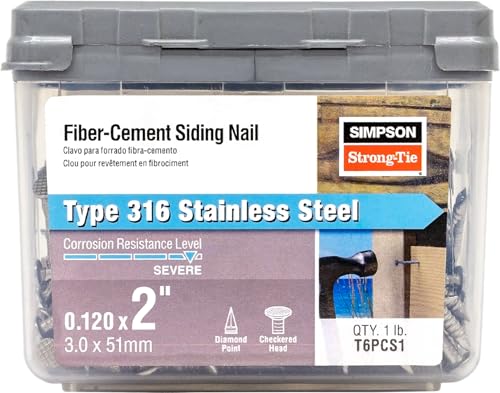
Coastal job? Stop at 316 stainless. These Simpson Strong‑Tie 2 inch x .120 nails are Type 316 SS, which offers top corrosion resistance against salt spray and harsh chemicals. They are designed for fiber‑cement siding, with a head and shank that seat cleanly and resist staining. You get them in a 1‑lb pack, great for targeted areas or smaller jobs near the water.
Stainless costs more up front but saves you from rust streaks, warranty callbacks, and patch paint. The .120 shank adds strength if you face‑nail trim or hit tough framing. They are not coil‑collated, so plan for hand nailing or use a compatible strip tool. If you work within a mile or two of the coast, these are the best nails for hardie siding from a corrosion standpoint.
Pros:
- Type 316 stainless for maximum corrosion resistance
- .120 shank for stronger drive and fewer bends
- Designed for fiber‑cement; seats clean and resists staining
- Ideal for coastal and chemical‑exposed environments
- Great for face‑nailing trim or repairs
Cons:
- Higher price than HDG or 304 stainless
- 1‑lb pack may not cover large walls
- Not coil‑collated; slower than gun nailing big runs
My Recommendation
If your map has salt air, pools, or industrial exposure, choose 316 stainless and skip the risk. These Simpson nails make sense for seaside homes, docks, and barrier islands where lesser coatings fail fast. They are among the best nails for hardie siding in coastal zones because they prevent rust stains and preserve paint lines for years. I use them for face nailing, trim, and any splash‑zone detail near ocean winds.
| Best for | Why |
|---|---|
| Coastal and marine exposure | 316 SS resists salt corrosion and staining |
| Face‑nailing Hardie trim | Stronger .120 shank for tough drives |
| Spot repairs near splash zones | Small pack; zero‑rust, clean finish |
Fas-n-Tite 1-1/4″ White Trim SS Nails

These 1-1/4 inch 304 stainless trim nails come pre‑finished in white, which is handy for exterior trim, soffit returns, and accessory pieces. They blend into prefinished white trim and cut down on touch‑up time. The 304 stainless resists corrosion in most inland areas and light coastal zones away from salt spray.
They are not a substitute for ring‑shank siding nails in the field, but they shine for detail work around windows, J‑channels, and light trim where you want a discreet head. I use them for color‑matched fastening where screws would stand out. For a polished finish, these can be the best nails for hardie siding trim and accessories, especially when you want fast, clean results.
Pros:
- White finish blends with trim; fewer touch‑ups
- 304 stainless fights rust in most climates
- Great for light exterior trim and accessories
- Small heads leave tidy, low‑profile marks
- Useful for punch lists and quick repairs
Cons:
- Not for main field nailing of lap siding
- 304 SS is weaker than 316 in salt environments
- Short length limits penetration on thick trim
My Recommendation
Use these as a specialty fastener for visible trim and touch‑ups, not as primary siding nails. They save time on paint and keep lines crisp where a larger head would show. For detail work, they can be the best nails for hardie siding trim because they pair a stainless core with a neat white head. Keep a box on hand for punch‑out day.
| Best for | Why |
|---|---|
| Visible white exterior trim | Color‑matched heads hide fasteners |
| Accessory pieces and light returns | Small head and 304 SS finish clean |
| Punch‑list fixes | Quick, neat, and corrosion‑resistant |
Metabo HPT 2″ 304 SS Coil Siding Nails

Want stainless in coil form for speed? These Metabo HPT 2 inch x .090 304 stainless, ring‑shank, wire‑coil nails merge corrosion resistance with production pace. They run in a 15‑degree siding nailer, so you get stainless protection without hand nailing. The ring shank bites hard, and the 2 inch length adds a safe margin through sheathing into studs.
Inland and light coastal zones benefit most from 304 stainless. It resists staining and holds paint lines better than galvanized in damp microclimates. I like these for shady sides of homes, lake houses, and spots with sprinklers or snowmelt. If you need speed and rust resistance, these are the best nails for hardie siding that still run in a coil gun.
Pros:
- 304 stainless resists corrosion better than HDG in damp zones
- Ring shank for strong, lasting hold
- Coil format keeps production fast
- 2″ length suits thicker wall assemblies
- Cleaner finish with fewer rust streak risks
Cons:
- Not as corrosion‑proof as 316 in salt air
- Higher cost than HDG coils
- 900‑count may run out faster on big jobs
My Recommendation
Choose these if you want stainless performance without giving up your coil nailer’s speed. They shine on lakefront builds, shady or damp walls, and anywhere sprinklers hit siding. They are often the best nails for hardie siding when you balance durability, appearance, and production pace. If you work within ocean spray zones, step up to 316 SS for maximum protection.
| Best for | Why |
|---|---|
| Damp or shaded elevations | 304 SS resists staining and corrosion |
| Production installs with coil guns | 15‑degree coils maintain speed |
| Thicker sheathing + stud penetration | 2″ length adds secure embed |
How to Choose the Best Nails for Hardie Siding in 2026
Picking the right nail is simple when you match four points: material, shank, length, and collation. Get those right and your siding sits flat, holds in storms, and looks clean for years. Here is how I break it down on every job.
1) Nail material: HDG vs. stainless
- Hot‑dipped galvanized (HDG): Best value inland. Real zinc layer that lasts longer than electro‑galv. Choose high‑quality HDG coils for fiber‑cement.
- 304 stainless: Better corrosion resistance than HDG in damp or shaded areas. Great near lakes, irrigation, or heavy snowmelt.
- 316 stainless: Top tier for coastal salt air or chemical exposure. Use within a few miles of the ocean or in marine spray zones.
2) Shank profile: choose ring shank
Ring shank nails grip studs and resist pullout from wind or siding expansion. Smooth shanks can back out over time. For lap siding, ring shank is worth it. It keeps clapboards tight and seams aligned.
3) Length and diameter
Pick a length that achieves solid penetration into framing while passing through siding and sheathing. Many installs land between 1-3/4 inch and 2 inch for blind nailing HardiePlank. Shank diameters around .090 to .113 are common. Test on scraps. Set your gun so the head sits snug and flush, not crushed or proud.
4) Collation and angle
Fiber‑cement crews favor 15‑degree wire‑coil nails. They feed well and fit popular siding guns. Keep coils dry and clean to avoid jams. If you hand nail or use a strip nailer, match the tool to the fastener.
5) Climate and exposure
- Inland, low‑corrosion: HDG is cost‑effective and durable.
- Damp or shaded: Consider 304 stainless for cleaner finishes.
- Coastal or marine: Choose 316 stainless to prevent rust streaks.
6) Installation details that matter
- Blind vs. face nailing: Blind nailing hides fasteners and protects heads. Face nailing may be needed at courses near eaves or trim—use stainless there if exposed.
- Gun setup: Use a fiber‑cement tip if available, test depth on offcuts, and keep pressure stable. Overdrives break the surface and invite moisture.
- Stud hits: Plan your layout. Snap lines to studs. Consistent stud hits prevent floating planks and wavy courses.
Pro Tips for a Cleaner, Longer‑Lasting Install
Shortcuts show up on the wall. I keep a simple checklist on every siding start. It saves time and callbacks.
- Store nails dry and clean. Wet coils corrode and jam.
- Use a gauge or story pole for start heights. Mis‑measures expose nails at overlaps.
- Cut fiber‑cement with a fiber‑cement blade and collect dust. Cleaner cuts seat tighter and reduce chipping near fasteners.
- Pre‑drill close to edges in cold weather if you must face nail near corners.
- Seal cut edges per paint system guidance. Better seal equals better hold and finish.
Common Mistakes to Avoid
- Using electro‑galvanized nails: They rust early and streak paint. Pick HDG or stainless.
- Overdriving the head: Crushed fiber‑cement invites water. Adjust the depth until heads sit just flush.
- Missing studs when blind nailing: Floating planks creep and rattle. Snap lines and verify stud centers.
- Too short a nail: If it barely hits framing, your hold is weak. Go 1-3/4 inch or 2 inch based on your sheathing stack.
- Mismatched climates: Inland nails at the beach will stain. Use 304 or 316 SS in corrosive zones.
Real‑World Use Cases: Which Nail Where?
I match nails to spots on the house. Here is a simple map you can trust on site.
- South and west walls, inland: 1-3/4″ HDG ring shank (Metabo HPT 13363HPT)
- North walls with shade and sprinklers: 2″ 304 SS coil ring shank (Metabo HPT 13355HPT)
- Coastal face nailing near bays or ocean: 2″ 316 SS (Simpson Strong‑Tie 316)
- White window trim and soffit returns: 1-1/4″ 304 SS white trim nails (Fas‑n‑Tite)
- Thick sheathing remodels: 2″ HDG ring shank (Metabo HPT 13365HHPT)
Follow local code and current Hardie instructions for exact fastener rules. As of 2026, blind nailing with corrosion‑resistant ring‑shank nails remains the gold standard for lap siding on wood framing. When in doubt, choose the more corrosion‑resistant option and set your depth with care. That is how you land on the best nails for hardie siding for each face of the house.
Cost vs. Performance: Where to Spend
Fastener budgets add up across a full elevation, but nails are cheaper than callbacks. HDG coils deliver great value inland and move fast in the gun. 304 stainless coils cost more but keep shady and damp walls cleaner for years. 316 stainless is a premium safety net where salt air lives; it avoids stains that no paint warranty will cover.
My rule is simple: spend to match the exposure. The best nails for hardie siding are the ones that won’t force a return visit. Pay for stainless when the air says so. Use HDG elsewhere and pocket the difference for better flashing and sealants.
FAQs Of best nails for hardie siding
What size nails should I use for Hardie lap siding?
Most jobs land at 1-3/4 inch or 2 inch ring‑shank nails. Pick a length that reaches solid penetration into studs after passing through siding and sheathing.
Are hot‑dipped galvanized nails good enough?
Yes, inland. Use quality HDG ring‑shank nails for most non‑coastal installs. In salt air or harsh chemicals, upgrade to 304 or 316 stainless.
Do I need ring‑shank nails for fiber‑cement?
I strongly recommend ring shank. It improves pullout resistance and keeps courses tight in wind and seasonal movement.
Can I face nail Hardie siding?
Blind nailing is preferred. Face nailing is allowed in specific cases. If you face nail, use corrosion‑resistant fasteners and set heads flush, not overdriven.
What nailer works with these nails?
A 15‑degree coil siding nailer is standard. Match nail angle and collation to your tool and test depth on scrap before starting.
Final Verdict: Which Should You Buy?
If you are inland and want speed and value, Metabo HPT hot‑dipped galvanized coils (1-3/4″ or 2″) are the best nails for hardie siding for most homes. They drive clean, grip hard, and keep paint lines tidy.
Near water or in damp zones, step up. Use Metabo HPT 304 stainless coils for production or Simpson 316 stainless for severe coastal air. Pick based on exposure, and you will always land on the best nails for hardie siding.
Related: shank nails are best.