
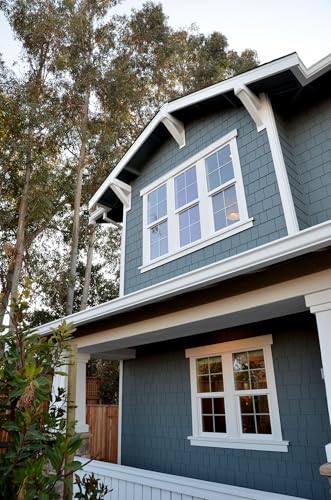
Choose 304/316 stainless, ring‑shank, full‑round head siding nails, 1‑1/2–2 inches.
You love cedar for its warmth and timeless look, but you hate streaks, popped boards, and loose shingles. I get it. Cedar’s natural oils and tannins can chew up the wrong fasteners, and then weather does the rest. The right nail choice stops rust stains, locks boards tight, and keeps repairs off your weekend list. In this guide, I’ll show you the best nails for cedar siding, explain sizes, shanks, and head styles, and help you pick a length that actually holds. I’ll also review top stainless options I use and trust, so your siding stays straight, clean, and solid for years.
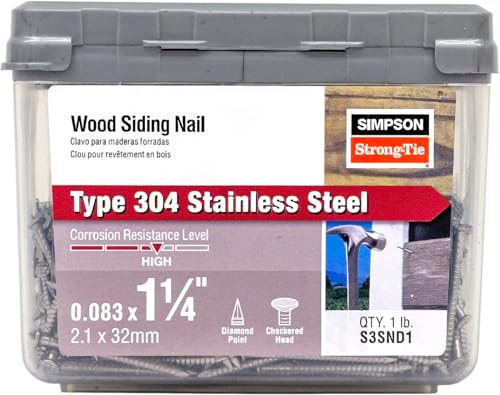
Simpson Strong-Tie S3SND1 Ring-Shank Wood…
CLASSIC DESIGN: These siding nails by Simpson Strong-Tie are given a diamond point for easy driving, the most common point type in most hardware. These are manufactured with a head…

Tandefio 2 Pound Box Siding…
You Will Receive: a set of hardwood flooring nails that come in a robust box to keep the packaging box safe; With a total weight of 2 LBS, this box…

Tandefio 2 Pounds 1-3/4 Inch…
Comprehensive Package: the package includes 1 box of stainless steel siding nails; This ensures you have enough supply to finish your projects without the need to make frequent purchases, making…
Simpson Strong-Tie S3SND1 1-1/4 in SS Nails

These Simpson Strong-Tie S3SND1 nails use Type 304 stainless steel with a ring shank and a full round head. At 1-1/4 inch long and 0.083 inch thick (14 gauge), they shine on thin cedar shakes, starter strips, and trim over solid wood. The diamond point helps set a clean start without splitting tight-grain cedar. If you want a small pack to handle touch-ups or small jobs, this 120-count box is perfect.
I reach for these when I need tight hold in thin material without telegraphing a huge head. The ring shank grabs well, which reduces lift and rattle in windy zones. The 304 stainless prevents black streaking on cedar from tannin and moisture. For full-thickness bevel siding into studs, you’ll want more length, but for shingles and light siding layers, these are a smart pick.
Pros:
- Type 304 stainless fights tannin stains and corrosion on cedar
- Ring-shank grip holds thin shakes and trim in wind and heat cycles
- Full round head gives secure bearing on brittle cedar fibers
- Diamond point drives clean with fewer splits
- Great small-quantity pack for punch lists and repairs
Cons:
- 1-1/4 inch length is too short for most bevel siding into studs
- Not ideal for coastal salt exposure; 316 stainless is better there
- Smaller head than roofing nails; not for high-exposure cap use
My Recommendation
If you are hanging cedar shingles, fixing starter courses, or tacking thin cedar trim, these are some of the best nails for cedar siding in light-duty work. The stainless steel stops early rust and stains. The ring shank gives a snug hold without you overdriving to “make it stick.” For thick clapboards into studs, step up to a 2-inch option.
| Best for | Why |
|---|---|
| Thin cedar shingles | 1-1/4 in length and ring shank prevent lift without splits |
| Starter strips and trim | Full head and 304 SS keep a neat look with strong hold |
| Repairs and small jobs | 120-count pack avoids buying a big box you will not use |
Tandefio 1-1/2 in 304 SS Siding Nails (2 lb)

This 2-pound box of Tandefio 1-1/2 inch 304 stainless nails is built for cedar, redwood, and roofing slates. They use a flat head that sits clean and spreads load well on soft cedar fibers. If you are fastening shingles, thin clapboards over sheathing, or flashing trim, that extra head area helps avoid pull-through. The stainless steel grade is right for most inland and suburban sites.
I like this set for siding panels, starter courses, and shingle work. The 1-1/2 inch length gives better bite than 1-1/4 without risking blow-through on thin courses. If you are fastening bevel siding into studs, you still want 1-3/4 to 2 inches. For layered work over sheathing, though, these can be some of the best nails for cedar siding where you do not need deep stud penetration.
Pros:
- 304 stainless steel resists cedar tannins and moisture
- Flat head offers strong bearing for shingles and thin boards
- 2-pound box suits a mid-size project or a full repair day
- Good length for sheathing-only or layered cedar installs
- Works across cedar, redwood, and slate for mixed jobs
Cons:
- Still short for standard bevel siding into studs
- Not a ring-shank pattern, so hold is less than annular rings
- Coastal jobs may need 316 stainless for salt exposure
My Recommendation
Choose these if you are hanging cedar shingles, starter strips, or thin lap over sheathing. The broad flat head protects the wood face, while 304 stainless keeps the look clean. For many remodels and patch jobs, these are among the best nails for cedar siding when you value head coverage over ring-shank grip. For heavy wind zones, I still prefer ring shank where code allows.
| Best for | Why |
|---|---|
| Cedar shingles and shakes | Flat head resists pull-through and seats flush |
| Thin lap over sheathing | 1-1/2 in length bites sheathing without over-penetration |
| Mixed material repairs | 304 SS suits cedar, redwood, and slate in one box |
Tandefio 1-3/4 in 304 SS Roofing/Siding Nails

At 1-3/4 inches, these Tandefio 304 stainless nails hit a sweet spot for many bevel cedar siding installs, especially over sheathing and into studs. The flat head helps seat shingles and thin lap cleanly, and the extra 1/4 inch vs. 1-1/2 helps reach solid wood with safer bite. They come in a 2-pound box, enough to cover a good section of wall or a focused project.
If you want a simple, stainless, general-purpose length for cedar siding, this is it. I have used 1-3/4 for 1/2 inch clapboards, blind-nailed near the top, and still gotten at least an inch into framing when I account for sheathing. They are a strong contender for the best nails for cedar siding when your boards are not too thick, and you still want clean heads and low risk of overdriving.
Pros:
- Useful 1-3/4 in length for many bevel siding installs
- 304 stainless manages cedar tannins and wet-dry cycles
- Flat head adds holding power against pull-through
- Great for shingles plus lap boards of moderate thickness
- 2-pound quantity balances cost and coverage
Cons:
- Not ring-shank; may hold less than annular designs in high wind
- Coastal salt zones may still want 316 stainless
- Thick 3/4 in clapboards into studs may need full 2 inches
My Recommendation
Use this length when your cedar boards are 1/2 inch thick or less, and you want a simple spec that works with sheathing-plus-stud targets. For many homeowners, these are among the best nails for cedar siding because they balance length, head size, and corrosion control. In gusty coastal winds, either pick ring-shank 304 or jump to 316 stainless where needed.
| Best for | Why |
|---|---|
| Moderate-thickness clapboards | 1-3/4 in length reaches framing with sheathing in play |
| Shingle and siding combos | Flat head works across profiles with fewer splits |
| General-purpose cedar jobs | 304 SS and versatile size cover many scenarios |
Tandefio 1-1/2 in 304 SS Roofing/Siding Nails

This Tandefio 1-1/2 inch 304 stainless pack is purpose-built for shingles, thin cedar lap, and roofing felt. The flat head helps keep soft cedar fibers pinned without crushing them. The stainless grade is a strong match for cedar’s tannins and outdoor moisture swings. If you work with thin materials around window and door trims, this length gives a secure grab without poking through.
For many small cedar tasks, this set hits the mark. It is easy to drive, forgiving on face grain, and reliable in rain and sun. If you are dealing with full 3/4 inch clapboards into studs, go longer. But for sheathing-only depth or layered installs, these can still be some of the best nails for cedar siding due to the balance of head design and corrosion resistance.
Pros:
- 304 stainless prevents staining and early rust on cedar
- Flat head supports thin faces and shingles with fewer pull-throughs
- Good control for trim, flashing, and felt work
- Cost-effective 2-pound box for steady work
- Smooth drive with low splitting risk
Cons:
- Short for thick bevel siding into studs
- Smooth shank style may not grip like ring-shank options
- Salt-heavy coastal zones need 316 stainless for longest life
My Recommendation
Pick these for shingles, thin cedar, and trim where looks and control matter. Their stainless build is key for cedar, and the head size adds margin. For main field siding into studs, pair these with a longer ring-shank option. In many mixed jobs, they still rate as some of the best nails for cedar siding where you value clean faces and steady performance.
| Best for | Why |
|---|---|
| Shingles and soffits | Flat head stays put without crushing soft cedar |
| Trim and flashing | 1-1/2 in gives grip without blow-through |
| Budget stainless choice | 2-pound pack covers many small projects |
Simpson Strong-Tie S6SND1 2 in SS Siding Nails

Simpson’s S6SND1 is the workhorse I trust for full-thickness cedar bevel siding. These are 2 inches long, 0.092 inch (13 gauge), with a ring shank, full round head, and a diamond point. Type 304 stainless stands up to cedar’s tannins and weather. The longer length helps you reach at least 1-1/4 inch into framing after passing through siding and sheathing, which is a common best practice.
The ring shank delivers high withdrawal resistance, so boards stay flat through hot summers and winter storms. The head profile covers the bearing area you need without looking bulky. If someone asked me to name the best nails for cedar siding on a standard home, I would point to this exact spec: 2-inch, 304 stainless, ring shank, full head. It hits all the right notes for strength, stain resistance, and clean looks.
Pros:
- Ideal 2 in length for most bevel cedar siding into studs
- Type 304 stainless resists stains and long-term corrosion
- Ring-shank design boosts hold in wind and seasonal movement
- Full round head balances strength with a neat face
- Diamond point reduces splitting on dry or tight-grain cedar
Cons:
- 120-count pack may be small for full-house projects
- Coastal marine sites may prefer 316 stainless
- Manual nailing can be slower than coil-nail setups
My Recommendation
This is my first choice for standard bevel siding over sheathing into studs. If you want to buy once and do it right, these are among the absolute best nails for cedar siding. They lock boards down, keep faces clean, and last. If you live right on the ocean, step up to 316 stainless, but for most homes, this is the sweet spot.
| Best for | Why |
|---|---|
| Bevel siding into studs | 2 in length and ring shank maximize hold and code fit |
| Wind-prone areas | Annular rings increase withdrawal resistance |
| Long-term clean look | 304 SS avoids rust streaks on cedar’s face |
How I Choose the Best Nails for Cedar Siding
I have torn off too many walls where the wrong fasteners ruined beautiful cedar. After years in the field, I can point to the must-haves that separate winners from headaches. Here is my short, friendly, but hard-earned checklist for the best nails for cedar siding. Use it, and your siding will thank you.
- Material: Stainless steel is king for cedar. Type 304 works in most areas. For coastal and marine air, Type 316 is the safer bet.
- Shank: Ring-shank (annular) nails hold best. Cedar moves with the seasons, and rings resist shake and uplift.
- Head style: Full round or a broad flat head spreads load. It keeps soft cedar fibers from crushing and helps stop pull-through.
- Length: Aim for at least 1-1/4 inch penetration into solid wood whenever you nail into framing. Over sheathing only, match length to layers so you avoid blow-through.
- Point: A diamond point helps reduce splits in tight grain. Pre-drill near edges if your boards are very dry or brittle.
- Finish: Do not use electro-galvanized nails on cedar. Hot-dip galvanized to a high standard can work, but stainless beats it for stain control.
- Nailing method: Hand-nail for precision and less damage on face grain. If you use a nailer, dial back pressure and test on scrap.
- Placement: Follow cedar siding rules. Blind nail high on the board, leave expansion gaps, and do not overdrive. A proud head invites water; a crushed head weakens the hold.
Real-World Sizing Tips That Save You Rework
Nail sizing is not guesswork. The right length is a match of board thickness, layers, and your target (studs or sheathing). I keep these simple rules on the truck for the best nails for cedar siding. They keep me out of trouble on job day.
- 1/2 inch beveled cedar over 1/2 inch sheathing into studs: 1-3/4 inch nails if your stud target is clean and true.
- 3/4 inch beveled cedar over 1/2 inch sheathing into studs: 2 inch nails to secure 1-1/4 inch or more into the stud.
- Shingles over sheathing only: 1-1/2 inch nails often do it, with flat or full heads to stop pull-through.
- Coastal or high-wind sites: Favor ring-shank nails and consider stepping up one size for safety if specs allow.
These are field-proven, simple, and safe. They also track with common guidance for cedar and wood sidings published by trade groups and code bodies. That blend of research and job-site results is what I rely on before I sink the first nail.
Field Notes: Mistakes I See and How to Avoid Them
I have been called to fix problems that started with fasteners more times than I can count. Here are the top slip-ups and how to dodge them when you shop for the best nails for cedar siding.
- Using electro-galvanized nails: Cedar’s tannins eat them fast. You will see black streaks and loose boards.
- Going too short: If you miss stud bite, the siding floats on sheathing. Expect warps, rattles, and blow-offs.
- Smooth shank on windy walls: The wind pulls. Rings resist. It is that simple.
- Overdriving heads: A buried head cuts fibers and funnels water. Set them flush and stop.
- Wrong head shape for shingles: Tiny heads can pull through. Use a full or flat head for soft faces.
- Skipping stainless near the coast: Salt air finds weak spots. 316 stainless pays for itself by avoiding rework.
Installation Pointers That Extend Cedar’s Life
Good nails help. Good technique makes them great. Pair the best nails for cedar siding with the steps below, and you will add years of clean, solid performance.
- Acclimate boards: Let cedar sit on site to adjust to local humidity before you install.
- Prime/cut ends: Seal end grain and cuts to limit moisture wicking.
- Blind nail high: Follow the manufacturer’s reveal and nailing height. It hides the nail and reduces direct water paths.
- Use a gauge: Keep reveals consistent. A board set too low catches water and stress.
- Control gun pressure: Test on scrap to set depth right at flush. No craters.
- Mind flashing: Kick-out and step flash right. Nails alone cannot fix water details.
Why Stainless Outlasts Galvanized on Cedar
Cedar’s extractives and tannins are tough on zinc coatings. Over time, galvanized nails can streak and corrode, even when they start thick. Stainless forms a passive film that resists those chemical attacks and wet-dry cycles. When I am asked what are the best nails for cedar siding if the goal is a clean face five, ten, and fifteen years out, my answer is stainless every time.
Type 304 is the everyday hero for most inland homes. Type 316 adds molybdenum, which bumps up resistance to chlorides, like salt spray. If you can smell the sea on a breezy day, 316 is worth the money. If you are miles inland, 304 stainless does the job and keeps budgets sane.
FAQs Of best nails for cedar siding
What size nails should I use for bevel cedar siding?
Most bevel siding over sheathing into studs needs 2 inch nails for 3/4 inch boards and 1-3/4 inch for 1/2 inch boards. Aim for at least 1-1/4 inch bite into solid wood.
Are stainless nails really necessary for cedar?
Yes. Cedar tannins react with common coatings and can cause stains and early failures. Stainless, especially 304 or 316, avoids that and is the best long-term choice.
Should I use ring-shank or smooth nails?
Use ring-shank for most siding. The rings increase holding power and resist seasonal movement and wind. Smooth shanks can work for light trims.
What about coastal homes?
Choose 316 stainless for the best salt resistance. It costs more but prevents pitting and stains. It is the safest route near the ocean.
Can I use a nail gun on cedar siding?
Yes, but test on scrap. Lower air pressure, use the right tip, and stop flush. Overdriving damages fibers and invites water.
Final Verdict: Which Should You Buy?
If you want a single pick that fits most homes, choose the Simpson Strong-Tie S6SND1 2 inch 304 stainless ring-shank. It nails the basics: length, hold, and clean faces.
For shingles and thin boards, the 1-3/4 inch Tandefio set is a smart, versatile buy. Match your climate and thickness, and you will have the best nails for cedar siding for years of low-hassle curb appeal.
Related: head siding nails.